


When people hear “part-time military,” they often picture one weekend a month and two weeks in the summer. Most National Guard members know that’s rarely reality.

You’re balancing a civilian career, military obligations, family responsibilities, and the possibility that your schedule could change overnight. Whether it's a state activation, a deployment, additional schools, or a natural disaster response, life as a citizen-soldier comes with financial uncertainty that many traditional budgeting guides don't account for. That’s why building an emergency fund isn't just smart. It's one of the most important financial tools you can have.
Think Like Someone With Variable Income
One of the biggest lessons comes from freelancers, commission-based sales professionals, and small business owners. Their income isn’t always predictable. Neither is yours.
Between drill pay, Annual Training, military schools, overtime at your civilian job, or temporary orders, your income may fluctuate throughout the year. Financial planners often recommend budgeting around your lowest predictable monthly income, then treating anything above that as an opportunity to strengthen your financial position rather than increase spending. That mindset helps prevent lifestyle inflation every time an extra military paycheck arrives.
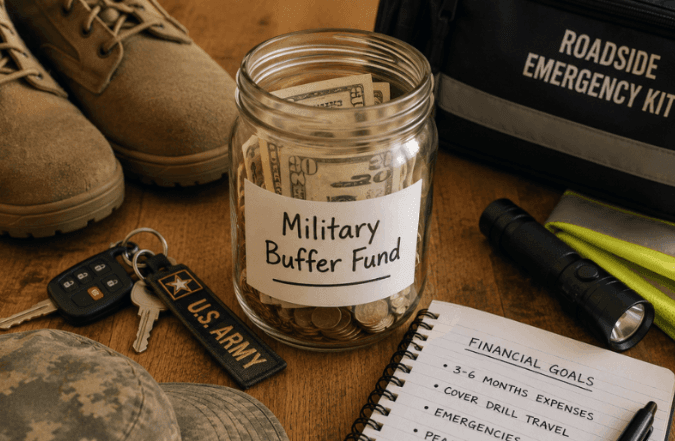
Build a “Military Buffer”
Instead of creating one giant emergency fund, consider creating a smaller fund specifically for military-related surprises. This isn’t your job-loss savings. It’s your “Guard life happens” fund.
It might cover:
- Additional childcare during military schools
- Fuel for unexpected travel
- Uniform replacements
- Hotel stays during weather delays
- Meals while waiting on travel reimbursements
- Lost civilian wages before differential pay arrives
Keeping a separate military buffer helps protect your primary emergency fund from routine military expenses.
Save Windfalls Not Lifestyle Upgrades
Financial experts consistently recommend using unexpected income to accelerate savings. Tax refunds, bonuses, and military special pays can become powerful emergency fund builders instead of disappearing into everyday spending.
For Guard members, those windfalls might include:
- Annual Training pay
- State Active Duty pay
- Deployment tax advantages
- Reenlistment bonuses
- Promotion back pay
- Civilian performance bonuses
A helpful rule is the 80/20 approach: save 80% of unexpected income and use 20% to enjoy the reward. That balance keeps you motivated while still making meaningful progress.

Automate What You Can
Behavioral finance research shows that people are far more successful at saving when they remove the need to make the decision every month. Automatic transfers consistently outperform relying on willpower alone. If drill pay hits your account on a predictable schedule, schedule an automatic transfer the same day. If you never see the money in your checking account, you’re less likely to spend it.
Keep It Liquid
An emergency fund isn’t an investment account. Its job isn’t maximizing returns. Its job is being available when life happens. Financial experts generally recommend keeping emergency savings in a federally insured savings or high-yield savings account where you can access the money quickly without market risk or withdrawal penalties.
Plan for Probability, Not Possibility
Emergency managers don’t prepare for the rarest disaster first. They prepare for the events most likely to happen. Apply the same thinking to your finances.
Ask yourself:
- What’s the repair my car is most likely to need?
- If my civilian hours were cut for one month, what bills would still have to be paid?
- How much would last-minute childcare cost if I were activated?
Instead of chasing an intimidating six-month savings goal immediately, start by covering the emergencies you're statistically most likely to face. Then continue building from there.

Review It Like a Readiness Checklist
Military readiness isn’t something you complete once. It’s something you maintain. Treat your emergency fund the same way.
Review it after:
- A promotion
- A new civilian job
- Marriage
- Divorce
- A PCS or relocation
- The birth of a child
- Major changes in housing costs
As your life changes, your emergency fund should grow with it.
Financial Readiness Is Military Readiness
The military spends a lot of time talking about physical readiness, medical readiness, and training readiness. Financial readiness deserves the same attention. An emergency fund won’t prevent unexpected expenses, but it can keep one bad day from becoming months of financial stress. For citizen-soldiers balancing two careers and family life, that’s not just food budgeting. It’s another way to stay mission ready.
Explore More with My Military Lifestyle and Guard Life!









No comments yet. Be the first!