


The hottest part of the Summer is over, so it’s time to look at a more full-bodied beer for cooler afternoons and evenings. An excellent example of an Autumn brew is the Belgian Saison.

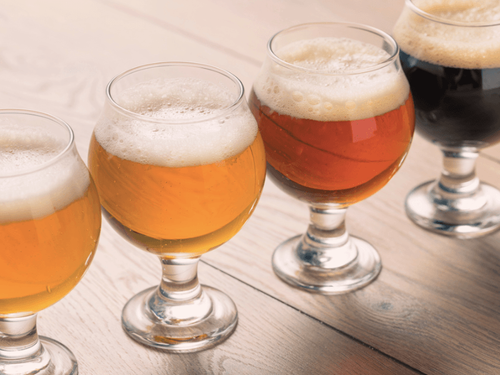
It has a slightly hazy, golden body with a very dense head. The aroma is light floral with a strong spice note. The flavor combines soft malt with mild hops. For the texture or feel on the tongue, there is a little effervescence to this brew. It’s like a mildly carbonated water but with a malt and spice aftertaste.
In addition to its full-bodied appearance and flavor, one of the interesting things about a Belgian Saison is the ‘Belgian Lace’ effect. This is the pattern of foam remaining on the side of your beer glass (not a mug; this is a Saison, not a Pils) as you enjoy every sip, bringing the level of beer down to its inevitable conclusion.
To brew this excellent beer, you’ll need the following:
- Ten pounds of Pilsner Malt
- One-half pound Aromatic Malt
- One-half pound Barley
- One ounce Styrian Goldings Hops
- One teaspoon Irish Moss flakes
- One teaspoon Orange Peel
- One packet Wyeast 3711 French Saison yeast
- One packet Lalvin k1116 White Wine yeast
- One ounce bottling sugar
If you’ve never heard of Styrian Goldings Hops before, it has an interesting history. Styrian Goldings (aka Styrian Celeia) comes from Slovenia’s Savinja Valley. This particular variety, however, is not an original Goldings Hop variety. Its ancestor is the British Fuggle Hop, which was introduced to the Savinja Valley in the early 20th century. Styrian Goldings quickly adapted to and has thrived in the region. Today, it is highly valued not just for its flavor and aroma, but also for its resistance to mildew and disease.
Okay, let’s get to brewing:
- Bring three gallons of water in your brew pot up to 165 degrees, then add the Malts and Barley in a grain bag. Steep for 30 minutes like a giant tea bag.
- Remove the grain bag and sparge (rinse) the grains into the brew pot for ten minutes. Raise heat to a boil.
- Once boiling starts, add the Styrian Goldings Hops and continue to boil for 45 minutes.
- Add Irish Moss and Orange Peel, then continue to boil for 15 minutes. Turn off the heat.
- Use your chiller to lower the temperature of your wort to under eighty degrees. If you don’t have a chiller yet, you can also place the pot in a sink or bucket filled with ice or cold water.
- Use a siphon to rack (draw) your wort from the pot into a carboy. Stop when you have around an inch left in the bottom of the pot. You can also pour the wort directly into the carboy or run it through a filter to remove tiny bits of grain dust (sediment).
- Add water to raise the wort to 5 ½ gallons, then stir to aerate it. As the surface stops whirling, carefully sprinkle the Wyeast 3711 over it, making sure it doesn’t clump.
- Place the carboy in a warm spot (about 75-80 degrees) with little light exposure. A closet is a great location. Ferment for three to four weeks.
- Once fermentation ceases, activate the Lalvin k1116 yeast in a cup of lukewarm water for three hours. Pitch into the wort to begin secondary fermentation for three days. Then rack the wort into a secondary container to eliminate any sediment before bottling.
- When the wort clears, rack it into another container if there is a large amount of sediment in the bottom of the carboy or other container.
- Dissolve the bottling sugar in one cup of hot water and add it to the wort. Stir thoroughly without splashing.
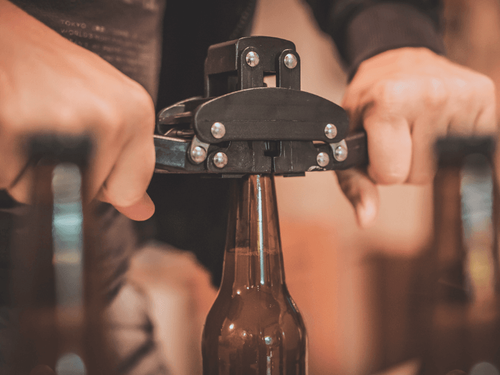
- Bottle and cap the beer. Allow it to age for three to four weeks.
- Enjoy!
Despite the European connection, this beer still reminds me of a brewpub I went to in Denver while attending Supply School on Lowry AFB. The pub, and Lowry for that matter, has long since closed, but I can still taste that beer along with the German-style pretzels that made the place so popular back in the 90s. Brewing it at home is always a pleasure for the memory and the taste buds.
If any of these terms are unfamiliar, you can find them in these previous Get Your Brew On blogs.
Explore More with My Military Lifestyle and Crafts!






No comments yet. Be the first!