



When I separated from the USAF in 2024, life insurance was the last thing on my mind.
I was focused on clearing the post, turning in gear, and figuring out what came next. Somewhere in that process, I overlooked what would happen to my life insurance.
I left without enrolling in Veterans' Group Life Insurance (VGLI), and I didn't fully understand when my military coverage would end.
If nobody walked you through SGLI and VGLI before you signed your DD-214, this article is for you.
Here's what you need to know about your coverage, the deadlines that matter, and how to avoid leaving your family unprotected.
What Is SGLI?
Servicemembers' Group Life Insurance (SGLI) is low-cost life insurance available to eligible active-duty, National Guard, and Reserve members.
Most eligible members are automatically enrolled in the maximum coverage unless they reduce or decline it.
The basics:
- Maximum coverage: $500,000, available in $50,000 increments.
- Monthly premium: $0.05 per $1,000 of coverage.
- Full coverage cost: $25 per month, plus $1 for Traumatic Injury Protection (TSGLI), totaling $26 monthly.
- Beneficiaries: You choose who receives the benefit if you die while covered.
Before separating, check your coverage amount and beneficiaries through the SGLI Online Enrollment System (SOES) at milConnect.
Don't assume you have $500,000 in coverage. You may have reduced it without remembering.
What Happens to SGLI After Separation?
Here's something I wish I'd understood better in 2024.
Eligible service members with full-time SGLI generally receive 120 days of free coverage after separation.
Your insurance doesn't necessarily disappear the day you receive your DD-214.
But after those 120 days, coverage generally ends unless you qualify for an additional extension.
Certain members who are totally disabled at separation may qualify for an SGLI Disability Extension of up to two years. Different rules can also apply to Guard and Reserve members with part-time coverage.
The important distinction is this:
The date your SGLI coverage ends is not the same as the deadline to apply for VGLI.
Confusing those two dates could leave your family uninsured.
What Is VGLI?
Veterans' Group Life Insurance (VGLI) allows eligible veterans to continue life insurance protection after leaving military service.
It's administered through the Office of Servicemembers' Group Life Insurance (OSGLI).
VGLI provides:
- Coverage from $10,000 to $500,000.
- Initial coverage up to the amount of SGLI you had at separation.
- Enrollment without health questions if you apply within 240 days.
- Renewable coverage for life, provided you continue paying premiums.
That third benefit is particularly valuable.
If you've developed medical conditions during service, obtaining private life insurance might be more difficult or expensive.
VGLI gives eligible veterans an opportunity to obtain coverage without medical underwriting during that initial enrollment window.
How Much Does VGLI Cost?
Unlike SGLI, VGLI premiums increase as you enter older age brackets.
Here are monthly premiums for $500,000 of coverage under the VA rate schedule effective July 1, 2025:
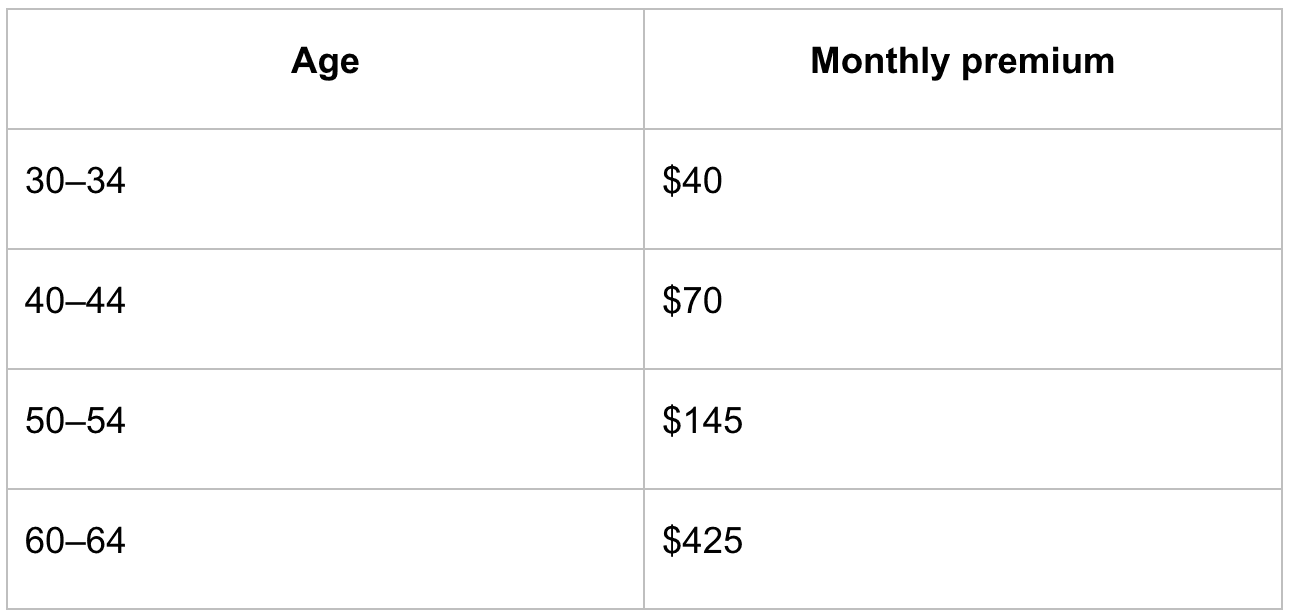
A 30-year-old pays $40 monthly. At 60, that same coverage costs $425 per month under the current schedule.
That's a significant difference.
VGLI may be affordable when you first separate but become expensive later. Review the VA's current premium chart before making a long-term decision.
The Three Deadlines You Cannot Ignore
This is the most important section of the article.
For most eligible service members leaving with full-time SGLI, the standard timeline is:
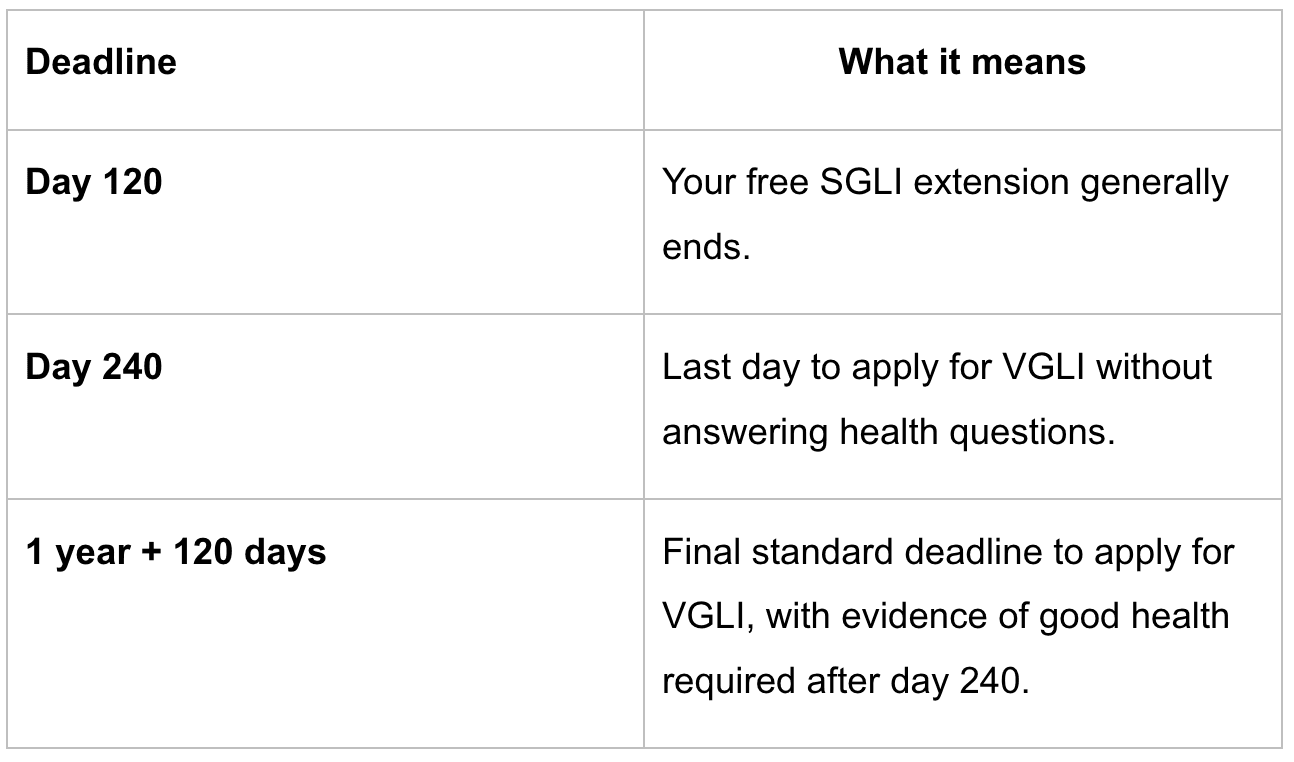
Here's the part people misunderstand:
Day 240 is not the last day you can apply for VGLI.
It's the last day you can generally apply without health underwriting.
If you apply later, but within one year and 120 days of separation, approval depends on satisfying the health requirements.
Also, don't assume applying for VGLI automatically keeps your SGLI active until the new policy begins.
If you need continuous protection, confirm when your replacement coverage actually takes effect.
My advice: Don't wait for day 240. Start comparing options before you separate and have coverage arranged before your existing insurance ends.
Can You Increase VGLI Coverage Later?
Yes, within limits.
Your initial VGLI coverage generally cannot exceed the SGLI amount you had when leaving service.
However, eligible VGLI policyholders under age 60 can increase coverage by $25,000 on their first policy anniversary and every five years afterward, up to $500,000, without new health underwriting.
You must elect those increases; they aren't automatic.
That's another reason to review your SGLI amount before separating.
Who Qualifies for VGLI?

Eligibility generally includes qualifying service members who had SGLI and:
- Were released from an active-duty period of 31 days or more.
- Retired or were released from the Ready Reserve or National Guard.
- Were assigned to the Individual Ready Reserve or Inactive National Guard.
- Were placed on the Temporary Disability Retirement List.
Certain members with part-time SGLI may also qualify following a duty-related injury or disability that affects their ability to obtain insurance at standard rates.
If you declined SGLI entirely, don't assume you can enroll in VGLI after separation.
You can check the full requirements through the VA's VGLI eligibility guide.
Is VGLI Better Than Private Life Insurance?
Not necessarily.
VGLI can be especially valuable if medical conditions make private coverage difficult to obtain.
But private term life insurance may offer lower or more predictable premiums for some healthy applicants.
Here's how I'd think about it:
VGLI may be attractive if:
- Your health makes private coverage expensive or difficult to obtain.
- You want renewable coverage without a fixed expiration age.
- You want to use the no-health-review enrollment window.
Private insurance may be attractive if:
- You qualify for competitive rates.
- You want a fixed premium for a defined term.
- You need a different coverage amount or policy structure.
There's also an option for eligible members to convert SGLI into certain permanent private insurance policies within 120 days after separation without providing evidence of good health.
Whatever you choose, never cancel existing insurance until your replacement policy has been approved and is effective.
How to Apply for VGLI
You have two main options.
Apply online: Visit the official VA VGLI page and follow the application instructions.
Apply by mail: Complete Form SGLV 8714 and submit it according to the form's instructions.
Have your separation information and desired coverage amount ready.
You'll also need to designate beneficiaries.
After applying, confirm your coverage effective date and premium arrangements. Don't assume submitting an application means your insurance is already active.
What to Do Before You Out-Process
Here's the checklist I'd follow:
- Verify your SGLI coverage and beneficiaries through SOES.
- Determine how much coverage your family needs based on income, dependents, and financial obligations.
- Mark the 120-day and 240-day dates on your calendar.
- Compare VGLI and private insurance before choosing a policy.
- Apply early and confirm your coverage is active before
While leaving the military can be a bit stressful; taking care of important items like obtaining insurance will ease your mind. Trust me once you tackle all the big items everything else will start to feel easier as time goes on.
Be sure to do your research and take notes along the way.
As you complete your transition back to civilian life remember to enjoy the journey and be proud of how far you’ve come.

No comments yet. Be the first!