


Most veterans with a service-connected disability focus on getting their rating right. That makes sense because your rating plays a major role in determining your monthly disability compensation.
But your rating doesn't necessarily cover every expense or limitation caused by your condition.
Certain service-connected disabilities may also qualify you for additional monthly compensation, vehicle assistance, home modifications, clothing allowances, or temporary increases in disability payments.
These benefits can be worth thousands of dollars, and some veterans may not realize they're eligible.
The VA groups many of these programs under “special claims,” although not every benefit works the same way. Some provide direct payments. Others help cover equipment or services. And each has its own eligibility requirements.
Here's what you should know, who may qualify, and how to take the next step.
What Is a VA Special Claim?
A VA special claim is a request for compensation or assistance based on circumstances that may not be fully addressed by a veteran's standard disability rating.
For example, a veteran who loses the use of a leg might qualify for disability compensation and additional assistance with a vehicle or home modifications.
Another veteran whose service-connected disability prevents them from maintaining substantially gainful employment might qualify for compensation at the 100% rate, even without a combined 100% disability rating.
The important distinction: These benefits aren't all automatic, and they aren't all extra monthly payments.
Some require a separate application. Others may be considered during a disability claim or when VA reviews medical evidence.
And while most of the programs below involve service-connected disabilities, certain VA dental benefits have additional eligibility pathways.
1. Automobile Allowance and Adaptive Equipment
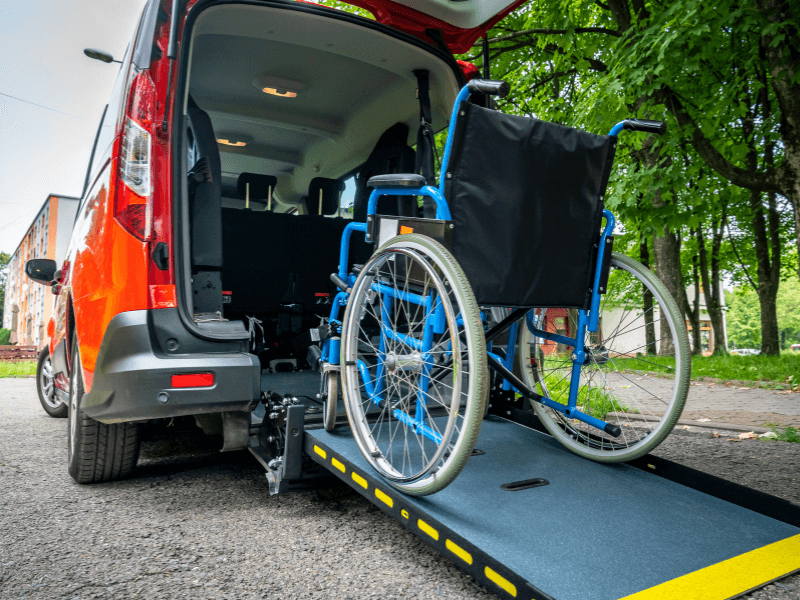
If your service-connected disability makes it difficult or impossible to operate a standard vehicle, VA may help you purchase or modify one.
The automobile allowance is generally a one-time payment toward an eligible vehicle. Adaptive-equipment assistance can help cover modifications such as hand controls, wheelchair lifts, and other approved equipment.
Who May Qualify?
Qualifying conditions can include:
- Loss or permanent loss of use of one or both feet.
- Loss or permanent loss of use of one or both hands.
- Certain severe permanent vision impairments.
- Certain qualifying joint conditions, including ankylosis, for adaptive-equipment assistance.
Not every mobility limitation qualifies, and eligibility for the automobile allowance isn't identical to eligibility for adaptive equipment.
How Much Can You Receive?
VA's published automobile allowance rate effective October 1, 2025, is up to $27,074.99.
Because the allowance is adjusted periodically, confirm the rate applicable to your claim before making a purchase.
Important: You must apply and receive VA approval before purchasing the vehicle or adaptive equipment. VA generally pays the vehicle seller directly for the automobile allowance.
How to apply: Use VA Form 21-4502 for the automobile allowance or VA Form 10-1394 for adaptive equipment.
Check automobile allowance eligibility and application requirements.
2. Clothing Allowance
Does a service-connected condition require you to wear a brace, prosthetic, or other device that damages your clothing?
You may qualify for a VA clothing allowance.
The benefit can also apply when medication prescribed for a service-connected skin condition causes permanent damage to clothing.
Who May Qualify?
Examples include veterans who use qualifying:
- Prosthetic limbs.
- Orthopedic braces or other approved devices.
- Wheelchairs or similar equipment.
- Skin medications that irreparably stain or damage outer clothing.
Simply using a brace or having a skin condition doesn't automatically establish eligibility. The device or medication must meet VA's requirements.
How Much Can You Receive?
The published 2026 clothing allowance is $1,053.19.
Depending on the circumstances, VA may provide a one-time payment or an annual payment. Some veterans qualify for more than one allowance when multiple eligible devices or medications independently meet the requirements.
VA generally sets an annual application deadline of August 1 for that year's allowance. Certain previously approved recurring payments may continue without a new annual application.
How to apply: Submit VA Form 10-8678, Application for Annual Clothing Allowance, or use VA's available online application.
Check clothing allowance eligibility.
3. Special Monthly Compensation (SMC)
This is one of the most important benefits veterans should understand.
Special Monthly Compensation, or SMC, provides additional or higher-rate disability compensation for certain severe service-connected disabilities.
It's separate from the standard disability rating schedule.
Who May Qualify?
SMC may apply to veterans with qualifying conditions such as:
- Loss or loss of use of certain limbs or extremities.
- Severe vision loss or blindness.
- Certain combinations of serious disabilities.
- A need for regular assistance with essential daily activities.
- Qualifying housebound status.
There are multiple SMC categories, each with its own criteria and payment rate.
For example, some veterans qualify for SMC based on the loss of use of a hand or foot. Others may qualify because service-connected disabilities create a need for regular personal assistance.
What About Aid and Attendance?
Aid and Attendance can refer to two different VA benefit arrangements.
For veterans receiving disability compensation, qualifying service-connected disabilities may establish entitlement to an SMC level based on the need for regular aid and attendance.
Separately, VA offers Aid and Attendance and Housebound increases for eligible veterans receiving VA pension benefits. Those pension programs have different eligibility rules.
Important: Don't assume the pension and disability-compensation programs are interchangeable. They have different requirements, and VA generally doesn't pay pension and disability compensation concurrently.
How to apply: Contact VA or an accredited representative to determine the appropriate SMC claim or review. Medical evidence is important, and VA Form 21-2680 may be used to document a need for regular aid and attendance or housebound status.
Review VA Special Monthly Compensation rates and eligibility.
4. VA Dental Treatment
VA dental benefits are more limited than many veterans realize.
Receiving disability compensation doesn't automatically mean you're eligible for comprehensive VA dental care.
Eligibility depends on factors such as your service-connected conditions, disability status, service history, and VA dental eligibility class.
Who May Qualify?
Certain veterans may qualify based on:
- A compensable service-connected dental disability.
- A qualifying noncompensable service-connected dental condition.
- A service-connected disability rated 100% disabling, or qualifying Individual Unemployability status.
- Former prisoner-of-war status.
- Certain recent separations from active duty.
- Other specific VA treatment or rehabilitation circumstances.
The amount and type of dental care available depend on the applicable eligibility class.
For example, some veterans may qualify for comprehensive dental treatment, while others qualify only for treatment of a specific condition.
Recently separated veterans may have a limited application window, commonly 180 days, but additional service and dental examination requirements apply.
Important: A temporary 100% rating for recovery from surgery doesn't automatically qualify someone for comprehensive dental treatment.
How to apply: Check your VA dental eligibility class and contact your VA healthcare facility for enrollment or treatment instructions.
See VA dental care eligibility requirements.
5. Temporary 100% Disability Ratings for Surgery or Recovery
If you're recovering from qualifying treatment for a service-connected condition, VA may temporarily pay disability compensation at the 100% rate.
This is often called a temporary total disability rating.
Who May Qualify?

Qualifying circumstances may include:
- Surgery for a service-connected disability requiring at least one month of convalescence.
- Surgery resulting in certain severe postoperative residuals.
- Immobilization of a major joint by a cast without surgery.
- Hospital treatment or observation for a service-connected disability lasting more than 21 days.
A routine surgery, short recovery period, or ordinary splint doesn't automatically qualify.
How Long Does It Last?
For qualifying convalescence, VA generally assigns a temporary total rating beginning with the applicable treatment period and continuing for the authorized recovery period.
Extensions may be available when the medical evidence supports them.
Hospitalization-based temporary ratings follow separate rules.
When the temporary rating ends, VA determines the appropriate ongoing evaluation. Your rating doesn't necessarily return unchanged if the medical evidence supports a different evaluation.
How to apply: File a disability compensation claim and provide the surgical report, hospitalization records, discharge instructions, and medical evidence documenting the required recovery.
Learn about temporary disability ratings.
6. Individual Unemployability (IU or TDIU)
What if your service-connected disabilities prevent you from maintaining substantially gainful employment, but your combined rating is below 100%?
You may qualify for Total Disability Based on Individual Unemployability, commonly called TDIU or IU.
This benefit allows VA to pay eligible veterans at the 100% disability compensation rate without necessarily changing their underlying combined rating.
Who May Qualify?
The usual percentage requirements are:
- One service-connected disability rated at least 60%, or
- Two or more service-connected disabilities with a combined rating of at least 70%, including one disability rated at least 40%.
Special rules may allow certain disabilities to be considered together for these thresholds.
Veterans who don't meet the standard percentage requirements may still be considered through an extraschedular process when service-connected disabilities prevent substantially gainful employment.
The central question is whether your service-connected disabilities prevent you from securing or following substantially gainful work.
Can You Work While Receiving IU?
Not all employment automatically disqualifies a veteran.
Marginal employment and certain protected work environments may be treated differently from substantially gainful employment.
However, earnings and employment circumstances matter, and VA may review eligibility when they change.
How to apply: Submit VA Form 21-8940 and the required employment information, including VA Form 21-4192 when applicable.
Check Individual Unemployability eligibility.
7. Specially Adapted Housing (SAH) and Special Home Adaptation (SHA)
For veterans with certain severe service-connected disabilities, everyday features of a home can become major obstacles.
Stairs, narrow doorways, bathrooms, and entrances may need substantial modifications.
VA offers housing grants to help eligible veterans and service members buy, build, or adapt a home.
Specially Adapted Housing (SAH)
SAH generally supports more extensive accessibility needs.
Qualifying disabilities can include certain losses or losses of use of limbs, severe blindness, serious burns, and other conditions specifically listed by VA.
Special Home Adaptation (SHA)
SHA addresses other qualifying disabilities, including certain losses of use of both hands, severe burns, and respiratory injuries.
The eligibility rules for SAH and SHA are different.
How Much Can You Receive?
VA's published FY 2026 grant limits are:
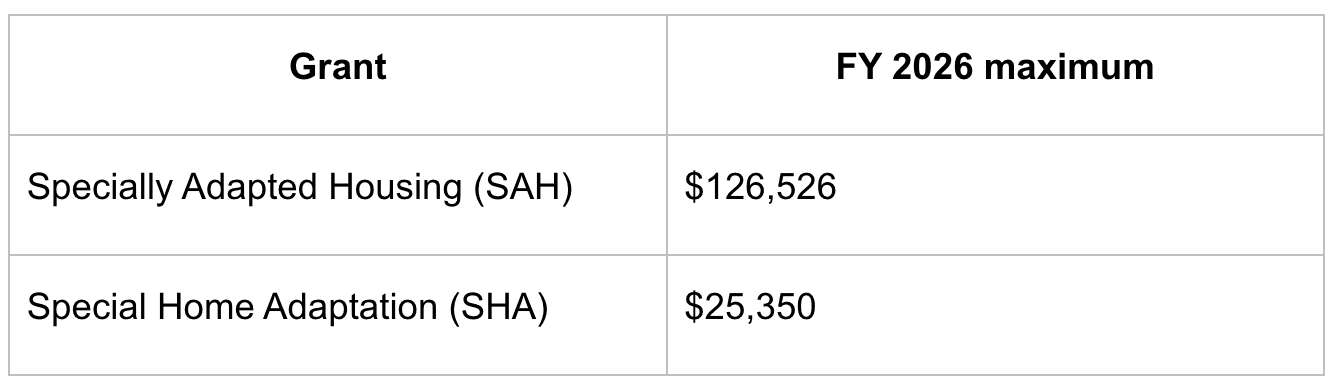
These are fiscal-year-specific figures, not confirmed FY 2027 limits. Since FY 2027 began October 1, 2026, check VA's current housing grant page for the applicable maximum before publication or application.
Eligible veterans may use SAH or SHA grant funds up to six times over their lifetime, subject to the program's total funding limits.
That doesn't mean receiving the full grant amount six separate times.
What If You're Living With Family?
VA also offers Temporary Residence Adaptation (TRA) assistance for certain veterans temporarily living in a family member's home.
TRA can help make eligible modifications to that residence.
Important: Work with VA on approval and project requirements before committing to construction or modifications.
How to apply: Submit VA Form 26-4555 or apply online.
Check housing grant eligibility and current limits.
8. Other Special Claims Worth Knowing About
The benefits above cover some of the most commonly overlooked opportunities, but they aren't the entire list.
VA also recognizes special claims involving certain injuries caused or aggravated by VA medical treatment, vocational rehabilitation, or other qualifying circumstances under 38 U.S.C. § 1151.
In some cases, eligible veterans may receive compensation as though the additional disability were service-connected, even though the injury didn't originate during military service.
Other specialized programs provide benefits for certain eligible children of veterans with qualifying service histories and birth defects.
These programs have their own eligibility rules and shouldn't be confused with ordinary disability compensation.
Explore VA's full special claims directory.
How to File a VA Special Claim
Here's where veterans can lose time.
Not every special benefit uses the same application.
VA Form 21-526EZ is commonly used for disability compensation claims, but several benefits require separate forms or additional evidence.
Use this quick reference before submitting anything.
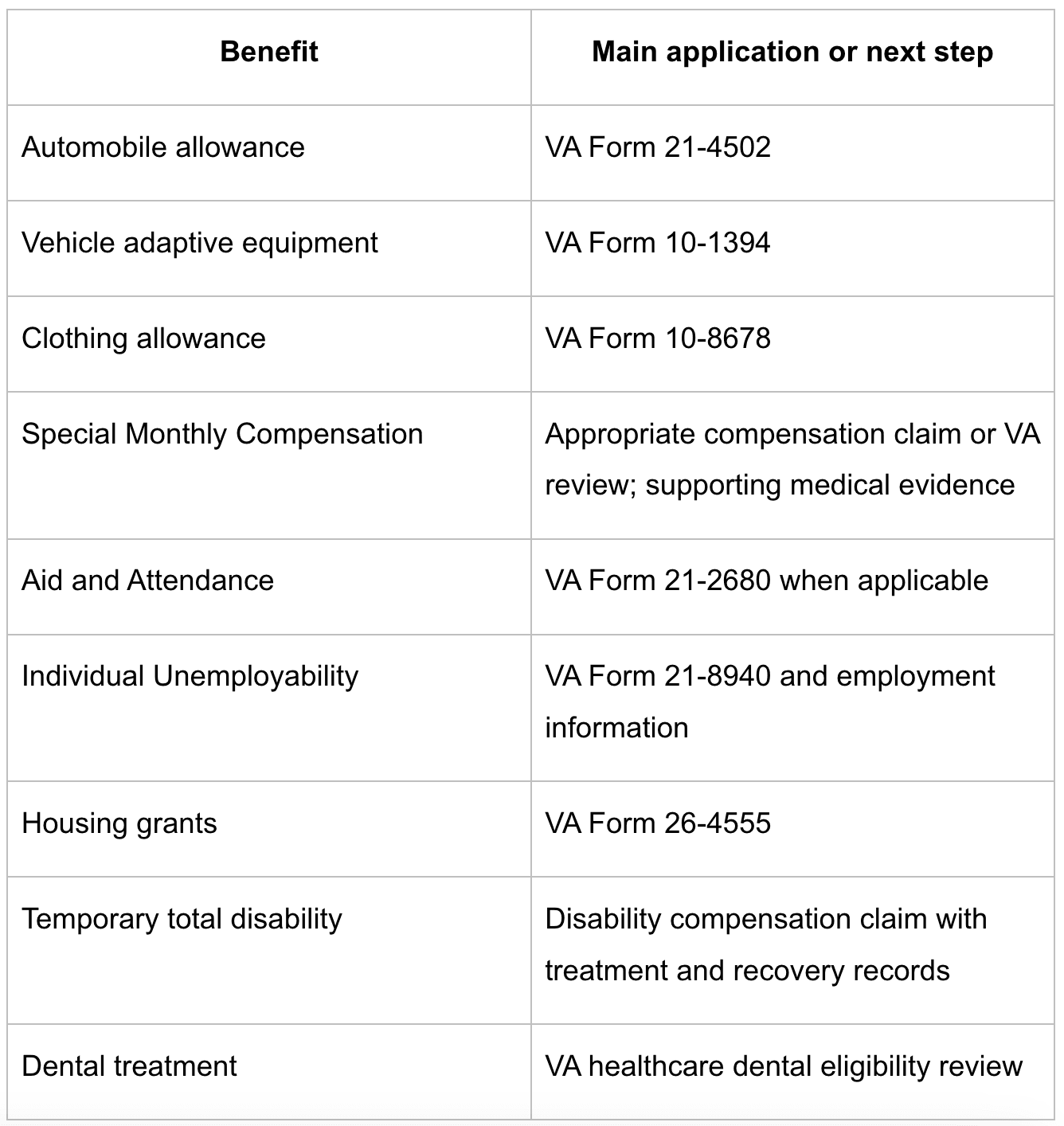
Some benefits may be awarded during an existing claim when the evidence establishes entitlement. Others require a specific application.
Before filing, confirm the current requirements with VA.
Find VA disability claim forms and additional applications.
Don't Try to Navigate Every Benefit Alone
If you're unsure which benefits apply to your circumstances, consider working with a VA-accredited Veterans Service Organization representative.
Organizations such as DAV, VFW, and the American Legion have accredited representatives who can help veterans review eligibility and prepare claims without charging for their services.
A representative can also help identify supporting evidence, explain application requirements, and determine whether a benefit should be pursued separately or as part of an existing claim.
Find a VA-accredited representative.
The Bottom Line
Your VA disability rating is important, but it may not tell the whole story.
Depending on your service-connected conditions and circumstances, you could qualify for additional compensation, equipment assistance, housing modifications, or other specialized benefits.
Some provide monthly payments. Others cover a particular expense or help make everyday life more manageable.
And none should be assumed automatic simply because you already receive disability compensation.
Start by reviewing the benefits that match your situation, check the current VA eligibility requirements, and gather the evidence you need.
You earned the right to apply for benefits established for qualifying veterans. Make sure you know which ones may be available to you.
Benefits Disclaimer: This article provides general educational information and is not legal advice or an official VA eligibility determination. Benefit amounts, deadlines, forms, and requirements may change. Eligibility depends on individual circumstances and applicable VA rules. Always verify current information directly with VA or a VA-accredited representative before applying or making financial commitments.









No comments yet. Be the first!