



Most service members assume legal help means hiring a private attorney and paying by the hour. That assumption makes sense. For civilians, it's usually true.
But if you're on active duty, a military retiree, or an eligible family member, you may have access to free military legal assistance right on your installation.
We're talking about wills, powers of attorney, lease reviews, notary services, and help understanding certain financial and legal protections. Services that could otherwise cost hundreds of dollars.
And you don't have to be facing a legal emergency to use them.
Here's what military legal assistance offices can do, who qualifies, and how to get help before you need it.
What Is Military Legal Assistance?
Military installations have legal assistance offices staffed by military attorneys, often called judge advocates or JAG attorneys, and sometimes civilian attorneys and legal support personnel.
These offices help eligible service members and their families with personal civil legal matters.
Think estate planning, housing questions, consumer problems, and legal paperwork. They're different from military defense counsel, who handle certain military justice matters, and attorneys who advise commanders.
The exact services depend on your military branch, installation, and the complexity of your situation.
What Free Legal Services Can JAG Provide?
Many installation legal assistance offices offer the following services at no attorney fee.
1. Wills and Estate Planning
A will helps determine how your property should be distributed after your death. It can also identify your preferred guardian for minor children, although a court makes the final guardianship determination.
Legal assistance attorneys may help prepare basic wills, living wills, and other estate planning documents.
If you have children, own property, or are preparing for deployment, this is worth addressing early.
2. Military Powers of Attorney
A power of attorney (POA) authorizes someone else to handle certain matters on your behalf.
For example, your spouse might need authority to manage a financial account, complete a vehicle transaction, or handle paperwork while you're deployed.
There are two common types:
- General POA: Grants broad authority over multiple matters.
- Special or limited POA: Authorizes specific actions, such as completing a particular transaction.
A general POA can create substantial financial risk if misused. If you only need someone to complete one task, ask whether a limited POA is the better option.
Also, banks and other institutions may have specific acceptance requirements. Confirm those before deployment.
3. Lease Reviews and Housing Questions
Before signing a lease, you can ask whether your installation's legal assistance office will review it.
An attorney may help identify concerning provisions, explain your obligations, and determine whether military-specific protections apply.
This can be especially useful before a permanent change of station (PCS) move.
4. Servicemembers Civil Relief Act (SCRA) Protections
The SCRA provides important legal and financial protections for qualifying service members.
These can include:
- A 6% interest-rate cap on qualifying debts incurred before military service, subject to applicable requirements.
- Lease termination rights after certain military orders, including qualifying PCS moves and deployments.
- Protections involving evictions, foreclosures, and civil court proceedings.
The 6% interest cap doesn't automatically apply to every loan. For qualifying pre-service obligations, you generally must notify the creditor and provide appropriate military documentation.
A legal assistance attorney can help determine which protections apply to your situation.
Learn more about SCRA protections from the Department of Justice.
5. Consumer Issues, Notary Services, and Other Assistance
Depending on the office, additional services may include:
- Consumer debt and collection disputes
- Problems involving vehicle purchases or financing
- Notarizing legal documents
- Certain family law questions
- Tax-related information or referrals
- Advice about other personal civil legal matters
Not every office handles every issue, so confirm availability before scheduling.
Who Qualifies for Free Military Legal Assistance?
Eligibility is broader than many people realize, although it isn't unlimited.
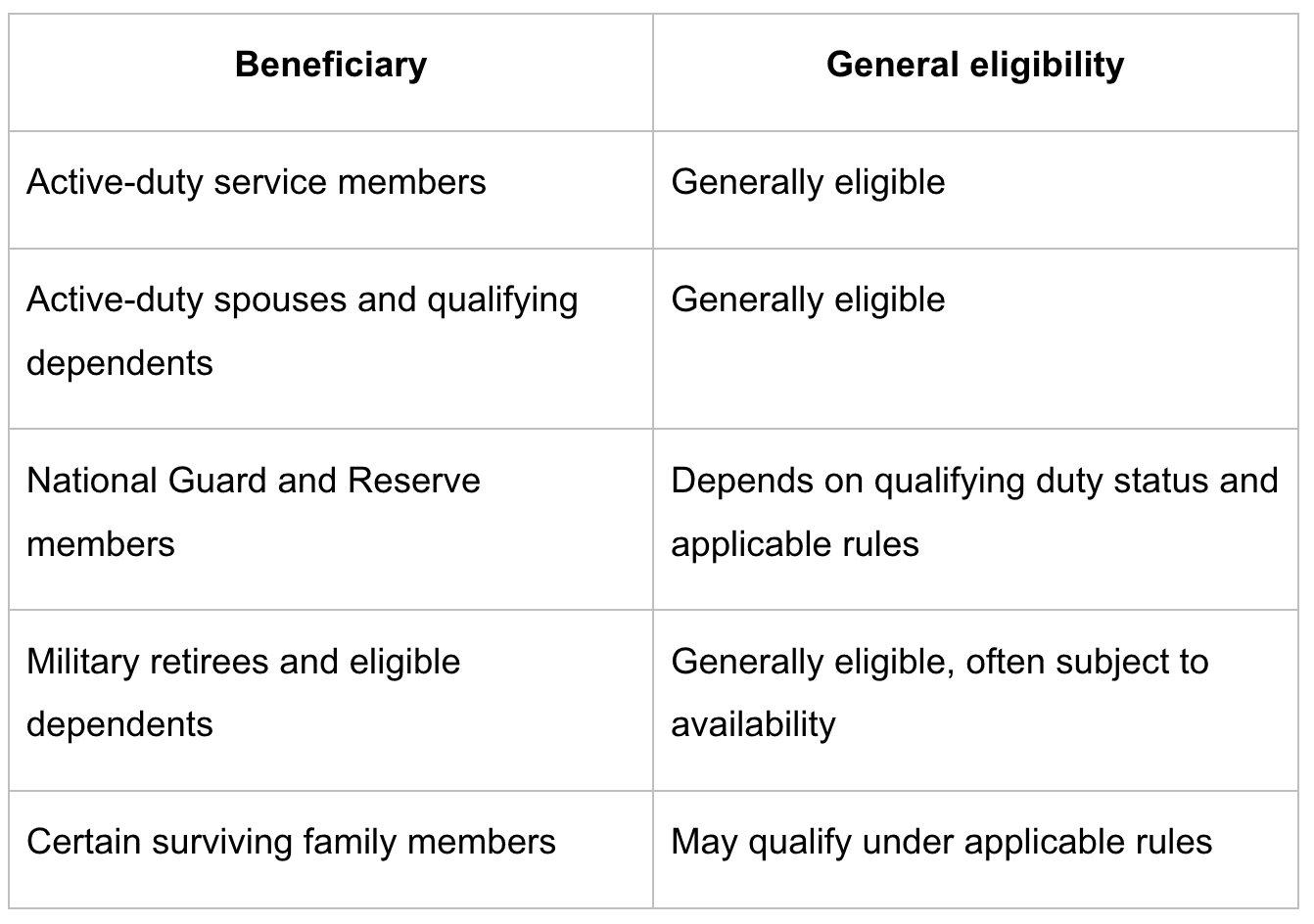
For National Guard and Reserve members, eligibility can depend on the type and duration of orders. Some members preparing for or returning from qualifying mobilizations may also receive assistance.
What about veterans who aren't retired?
Prior military service alone generally doesn't establish continuing eligibility for installation legal assistance. Some veterans may qualify under other specific categories or programs.
Eligibility also doesn't guarantee an immediate appointment. Offices may prioritize active-duty needs or limit services when staffing is constrained.
The easiest approach is to call your installation's legal assistance office and confirm your eligibility before visiting.
What Military Legal Assistance Usually Cannot Do
Free legal assistance is valuable, but it doesn't replace a private attorney for every situation.
Most installation legal assistance offices generally cannot provide:
- Routine representation in civilian court proceedings
- Criminal defense through the legal assistance program
- Legal services for private business or commercial ventures
- Representation when professional conflict-of-interest rules prohibit it
Some offices offer limited additional services or referrals, so don't assume your situation is automatically excluded.
For military criminal or disciplinary matters, separate military defense counsel may be available.
What About Divorce or Family Disputes?
Legal assistance attorneys may provide advice about divorce, separation, custody, or support issues, depending on office policy.
However, an attorney generally cannot advise both spouses in the same dispute when their interests conflict.
You may need separate counsel, and court representation may require a civilian attorney.
Is Your Conversation Confidential?
Generally, yes. Legal assistance attorneys owe clients professional duties of confidentiality, and qualifying communications may be protected by attorney-client privilege.
That doesn't mean every communication is protected without exception, but seeking personal legal advice doesn't ordinarily mean your conversation is reported to your commander.
How to Find Your Military Legal Assistance Office
There's no single office that handles every military installation, but finding help is straightforward.
- Use the Military OneSource Legal Assistance resource. It can help direct you to installation legal services.
- Check your installation's official website. Search for “Legal Assistance,” “Staff Judge Advocate,” or “JAG Office.”
- Ask your unit administrative office. They can often direct you to the right installation contact.
- Call Military OneSource at 800-342-9647. Representatives can help connect you with appropriate resources and referrals.
You can also try the Air Force Legal Assistance Locator, although its installation directory has geographic and service-specific limitations.
Military OneSource provides information and referrals, but it doesn't guarantee free representation by a civilian attorney. If your issue falls outside installation services, ask about available legal aid or pro bono resources.
What to Bring to Your Appointment
A little preparation can make your appointment much more productive.
Bring your military identification or other required proof of eligibility, along with documents related to your legal question.
For specific services:
- Will: Consider your beneficiaries, preferred executor, guardianship wishes, and major assets.
- Power of attorney: Know whom you're authorizing, what they need to do, and any institution-specific requirements.
- Lease review: Bring the full proposed lease and relevant military orders.
- Consumer dispute: Bring contracts, account statements, and correspondence.
If you're preparing for deployment, schedule your appointment well in advance. Waiting until the last week could leave you without enough time to complete important documents.
Frequently Asked Questions
Can military spouses use JAG legal assistance?
Yes. Eligible military spouses can generally receive personal legal assistance, subject to applicable rules and office availability.
Can military retirees get free legal help?
Generally, yes. Retirees and eligible dependents may receive installation legal assistance, although some offices prioritize active-duty appointments.
Can JAG help with a divorce?
Many legal assistance offices can provide information or advice about divorce and family law. They generally don't provide routine civilian court representation, and conflict-of-interest restrictions apply.
Can JAG prepare a free will?
Yes. Preparing basic wills is a common military legal assistance service. Complex estate planning may require specialized civilian counsel.
The Bottom Line
You don't need to wait for a legal emergency to take advantage of military legal assistance.
A will, power of attorney, or lease review might seem like something you can put off. But handling these documents early can prevent serious problems later, especially before a deployment or PCS move.
If you're eligible, installation legal assistance is one of the military benefits worth using before you actually need it.
Start by finding your nearest military legal assistance office through Military OneSource, confirm what services are available, and schedule an appointment.
It could save you money, time, and a lot of unnecessary stress.
This article provides general information, not individualized legal advice. Eligibility, services, and legal protections vary by circumstances, military branch, and installation. Consult a qualified legal assistance attorney for advice about your situation.











No comments yet. Be the first!