
Members Only
6 Service Branches3 Rank Categories24 Pay Grades140+ Official InsigniaLast Updated: October 2026

Military Rank Structure: Every Rank in Order, With Insignia for All 6 Branches

The U.S. military organizes roughly 1.3 million active-duty service members across six branches into three categories: enlisted personnel, warrant officers, and commissioned officers. Together they span 24 pay grades, from E-1 through O-10. This guide lists every military rank in order for the Army, Marine Corps, Navy, Air Force, Space Force, and Coast Guard, with official insignia, abbreviations, and the responsibilities behind each title. It also explains where the branches differ, such as when NCO status begins and what the Navy means by a "rate."
Enlisted Grades
E-1 to E-9

Warrant Officer Grades
W-1 to W-5

Officer Grades
O-1 to O-10

Wartime Reserved
O-11

What Is Military Rank Structure?

The framework that defines authority and responsibility across U.S. armed forces

Military rank structure is the hierarchical system that organizes every service member in the U.S. Armed Forces by authority, responsibility, and pay. Every member of the Army, Marine Corps, Navy, Air Force, Space Force, and Coast Guard fits into one of three categories: enlisted, warrant officer, or commissioned officer. Each category has its own progression of pay grades, its own promotion path, and its own role in mission execution.

The three categories are not parallel paths, they serve different purposes. Enlisted personnel form roughly 82% of the force and carry out the technical, operational, and combat work of the military. Warrant officers (where they exist) are deep technical specialists, often pulled from the enlisted ranks for specialized expertise. Commissioned officers, about 18% of the force, are generalists trained to lead units, make strategic decisions, and command operations.

While the pay grade system is shared across all branches (an E-5 earns the same base pay whether they serve in the Army or the Coast Guard), rank titles, traditions, and insignia differ significantly. A Sergeant in the Army and a Petty Officer Second Class in the Navy hold the same pay grade and similar leadership responsibility, but their uniforms, insignia, and service cultures are very different. The same title can even mean different grades: a Staff Sergeant is an E-6 in the Army and Marine Corps but an E-5 in the Air Force.

Rank vs. Pay Grade: What's the Difference?

Two related but distinct concepts every military family should understand
GRADE
Administrative & Universal

Pay grades like E-4, W-2, or O-5 standardize pay across all six branches. The letter shows the category (E = enlisted, W = warrant officer, O = commissioned officer), and the number shows seniority within that category.

Two service members at the same pay grade earn the same base pay, regardless of branch or rank title, which makes pay grade the cleanest way to compare ranks across services.

RANK
Title, Authority & Precedence

Rank is the title a service member holds within their branch, such as Sergeant, Petty Officer Second Class, or Staff Sergeant. It carries authority, precedence, and often a specific role.

Two members at the same pay grade can hold different ranks: an Army Corporal and an Army Specialist are both E-4, but the Corporal is an NCO and outranks the Specialist. The Navy and Coast Guard call enlisted ranks "rates" and call a sailor's job a "rating."

Enlisted Rank Structure & Insignia (E-1 to E-9)

The backbone of the U.S. military. Roughly four fifths of the total force.

Enlisted service members carry out the technical, operational, and combat work of the U.S. military. Enlisted careers move through three broad tiers: junior enlisted, noncommissioned officers (called petty officers in the Navy and Coast Guard), and senior enlisted leaders. Each branch draws the lines between those tiers a little differently, so the pay grades on each card are general ranges. The table below the cards shows exactly where each branch places them.

GENERALLY E-1 TO E-3

Junior Enlisted

Every enlisted career starts here. After basic training, most members go straight to job training, then serve as qualified members of their unit while building skills in their career field (MOS, rating, or AFSC). Promotion through these grades is mostly time-based. In the Air Force and Space Force, E-4 is also a junior enlisted grade.
GENERALLY E-4 TO E-6

NCO's and Petty Officers

First-line leaders who train, supervise, and take responsibility for junior enlisted members. NCO status begins at E-4 for Army Corporals (but not Specialists), Marines, and Navy and Coast Guard petty officers, and at E-5 in the Air Force and Space Force. Marine E-6s are already Staff NCOs.
GENERALLY E-7 TO E-9

Senior Enlisted Leaders

Senior NCOs in the Army, Air Force, and Space Force; Staff NCOs in the Marine Corps (from E-6); Chief Petty Officers in the Navy and Coast Guard. Most reach E-7 somewhere between 10 and 16 years of service. At E-8 and E-9, many serve as a commander's senior enlisted advisor, while others stay on a technical track. Careers generally top out around 30 years.
GRADEARMYMARINESNAVYAIR FORCESPACE FORCECOAST GUARD
E-1
Private
Private
Seaman Recruit
(SR)
Airman Basic
Specialist 1
(Spc1)
Seaman Recruit
(SR)
E-2
Army Private (PV2, E-2) rank insignia: one chevron
Private
(PV2)
Marine Corps Private First Class (E-2) rank insignia: one chevron
Private First Class
(PFC)
Navy Seaman Apprentice (E-2) rank insignia: two diagonal stripes
Seaman Apprentice
(SA)
Air Force Airman (E-2) rank insignia: one chevron with a star in a circle
Airman
(Amn)
Space Force Specialist 2 (E-2) rank insignia: Space Force Delta above one bar
Specialist 2
(Spc2)
Coast Guard Seaman Apprentice (E-2) rank insignia: two diagonal stripes
Seaman Apprentice
(SA)
E-3
Army Private First Class (E-3) rank insignia: one chevron and one rocker
Private First Class
(PFC)
Marine Corps Lance Corporal (E-3) rank insignia: one chevron with crossed rifles
Lance Corporal
(LCpl)
Navy Seaman (E-3) rank insignia: three diagonal stripes
Seaman
(SN)
Air Force Airman First Class (E-3) rank insignia: two chevrons with a star in a circle
Airman First Class
(A1C)
Space Force Specialist 3 (E-3) rank insignia: Space Force Delta above two bars
Specialist 3
(Spc3)
Coast Guard Seaman (E-3) rank insignia: three diagonal stripes
Seaman
(SN)
E-4
Army Corporal (CPL, E-4) rank insignia: two chevrons
Corporal
(CPL)
Marine Corps Corporal (E-4) rank insignia: two chevrons with crossed rifles
Corporal
(Cpl)
Navy Petty Officer Third Class (E-4) rank insignia: eagle above one chevron
Petty Officer Third Class
(PO3)
Air Force Senior Airman (E-4) rank insignia: three chevrons with a star in a circle
Senior Airman
(SrA)
Space Force Specialist 4 (E-4) rank insignia: Space Force Delta above three bars
Specialist 4
(Spc4)
Coast Guard Petty Officer Third Class (E-4) rank insignia: eagle above one chevron
Petty Officer Third Class
(PO3)
Army Specialist (SPC, E-4) rank insignia: eagle on a green spade-shaped patch
Specialist
(SPC)
E-5
Army Sergeant (SGT, E-5) rank insignia: three chevrons
Sergeant
(SGT)
Marine Corps Sergeant (E-5) rank insignia: three chevrons with crossed rifles
Sergeant
(Sgt)
Navy Petty Officer Second Class (E-5) rank insignia: eagle above two chevrons
Petty Officer Second Class
(PO2)
Air Force Staff Sergeant (E-5) rank insignia: four chevrons with a star in a circle
Staff Sergeant
(SSgt)
Space Force Sergeant (E-5) rank insignia: Space Force Delta and globe above chevrons
Sergeant
(Sgt)
Coast Guard Petty Officer Second Class (E-5) rank insignia: eagle above two chevrons
Petty Officer Second Class
(PO2)
E-6
Army Staff Sergeant (SSG, E-6) rank insignia: three chevrons and one rocker
Staff Sergeant
(SSG)
Marine Corps Staff Sergeant (E-6) rank insignia: three chevrons, one rocker, crossed rifles
Staff Sergeant
(SSgt)
Navy Petty Officer First Class (E-6) rank insignia: eagle above three chevrons
Petty Officer First Class
(PO1)
Air Force Technical Sergeant (E-6) rank insignia: five chevrons with a star in a circle
Technical Sergeant
(TSgt)
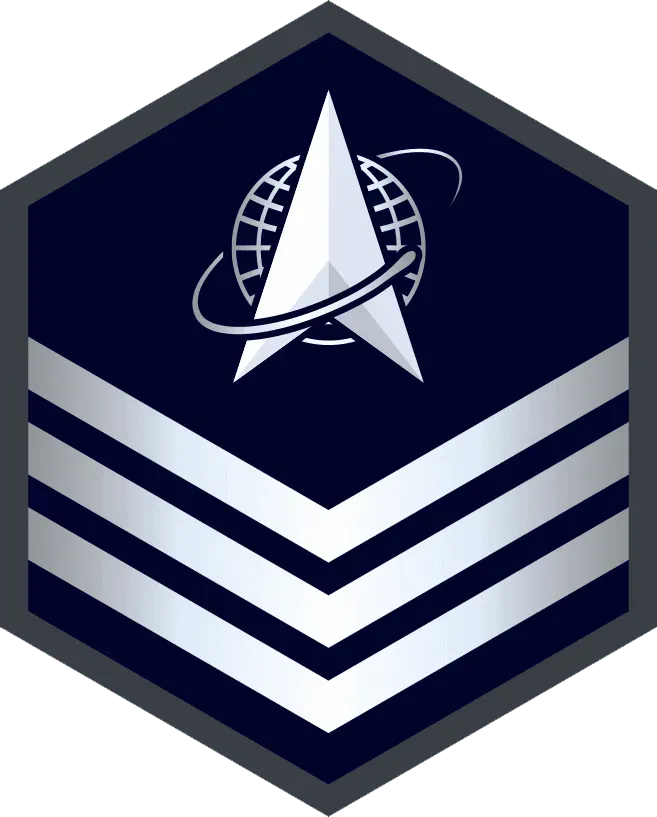
Space Force Technical Sergeant (E-6) rank insignia: Space Force Delta and globe above chevrons
Technical Sergeant
(TSgt)
Coast Guard Petty Officer First Class (E-6) rank insignia: eagle above three chevrons
Petty Officer First Class
(PO1)
E-7
Army Sergeant First Class (SFC, E-7) rank insignia: three chevrons and two rockers
Sergeant First Class
(SFC)
Marine Corps Gunnery Sergeant (E-7) rank insignia: three chevrons, two rockers, crossed rifles
Gunnery Sergeant
(GySgt)
Navy Chief Petty Officer (E-7) rank insignia: eagle above three chevrons and a rocker
Chief Petty Officer
(CPO)
Air Force Master Sergeant (E-7) rank insignia: five chevrons down, one up, star in a circle
Master Sergeant
(MSgt)
Space Force Master Sergeant (E-7) rank insignia: Space Force Delta and globe with chevrons
Master Sergeant
(MSgt)
Coast Guard Chief Petty Officer (E-7) rank insignia: eagle above three chevrons and a rocker
Chief Petty Officer
(CPO)
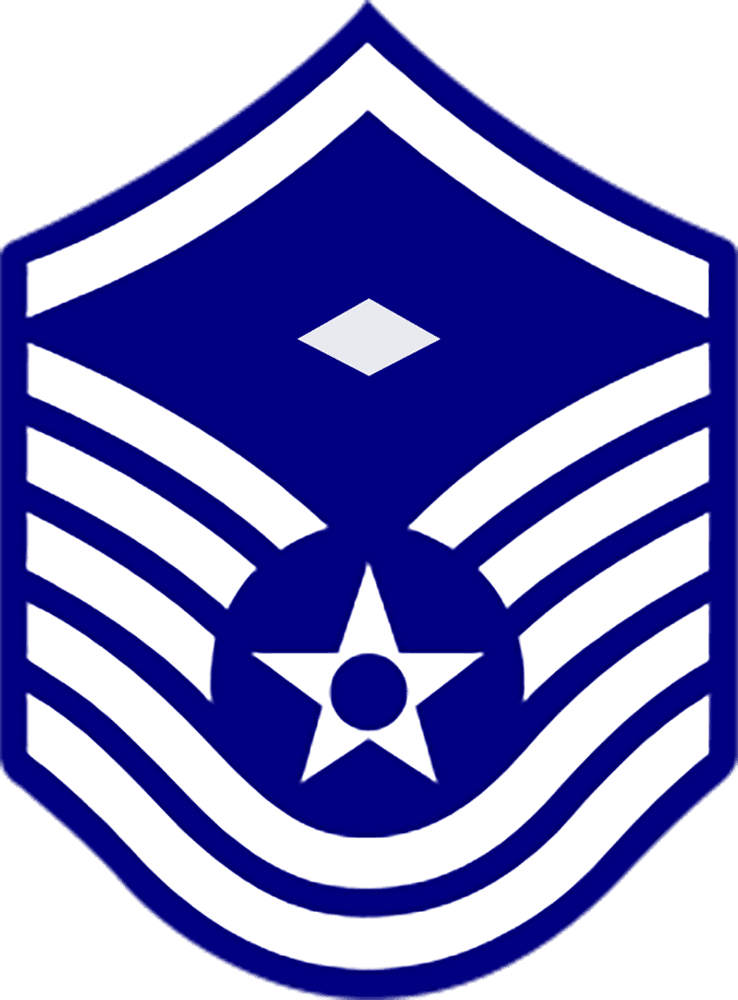
Air Force First Sergeant (E-7) rank insignia: Master Sergeant chevrons with a diamond
First Sergeant
E-8
Army Master Sergeant (MSG, E-8) rank insignia: three chevrons and three rockers
Master Sergeant
(MSG)
Marine Corps Master Sergeant (E-8) rank insignia: three chevrons, three rockers, crossed rifles
Master Sergeant
(MSgt)
Navy Senior Chief Petty Officer (E-8) rank insignia: one star above an eagle, chevrons and rocker
Senior Chief Petty Officer
(SCPO)
Air Force Senior Master Sergeant (E-8) rank insignia: five chevrons down, two up, star in a circle
Senior Master Sergeant
(SMSgt)
Space Force Senior Master Sergeant (E-8) rank insignia: Space Force Delta and globe with chevrons
Senior Master Sergeant
(SMSgt)
Coast Guard Senior Chief Petty Officer (E-8) rank insignia: one star above an eagle and chevrons
Senior Chief Petty Officer
(SCPO)
Army First Sergeant (1SG, E-8) rank insignia: three chevrons, three rockers and a diamond
First Sergeant
(1SG)
Marine Corps First Sergeant (E-8) rank insignia: three chevrons, three rockers and a diamond
First Sergeant
Air Force First Sergeant (E-8) rank insignia: Senior Master Sergeant chevrons with a diamond
First Sergeant
E-9
Army Sergeant Major (SGM, E-9) rank insignia: three chevrons, three rockers and a star
Sergeant Major
(SGM)
Marine Corps Master Gunnery Sergeant (E-9) rank insignia: chevrons, four rockers, bursting bomb
Master Gunnery Sergeant
(MGySgt)
Navy Master Chief Petty Officer (E-9) rank insignia: two stars above an eagle and chevrons
Master Chief Petty Officer
(MCPO)
Air Force Chief Master Sergeant (E-9) rank insignia: five chevrons down, three up, star in a circle
Chief Master Sergeant
(CMSgt)
Space Force Chief Master Sergeant (E-9) rank insignia: Space Force Delta and globe with chevrons
Chief Master Sergeant
(CMSgt)
Coast Guard Master Chief Petty Officer (E-9) rank insignia: two stars above an eagle and chevrons
Master Chief Petty Officer
(MCPO)
Army Command Sergeant Major (CSM, E-9) rank insignia: chevrons, rockers and a star in a wreath
Command Sergeant Major
(CSM)
Marine Corps Sergeant Major (E-9) rank insignia: three chevrons, four rockers and a star
Sergeant Major
(SgtMaj)
Navy Fleet/Command Master Chief (E-9) rank insignia: two stars above an eagle with a command star
Fleet/Command Master Chief Petty Officer
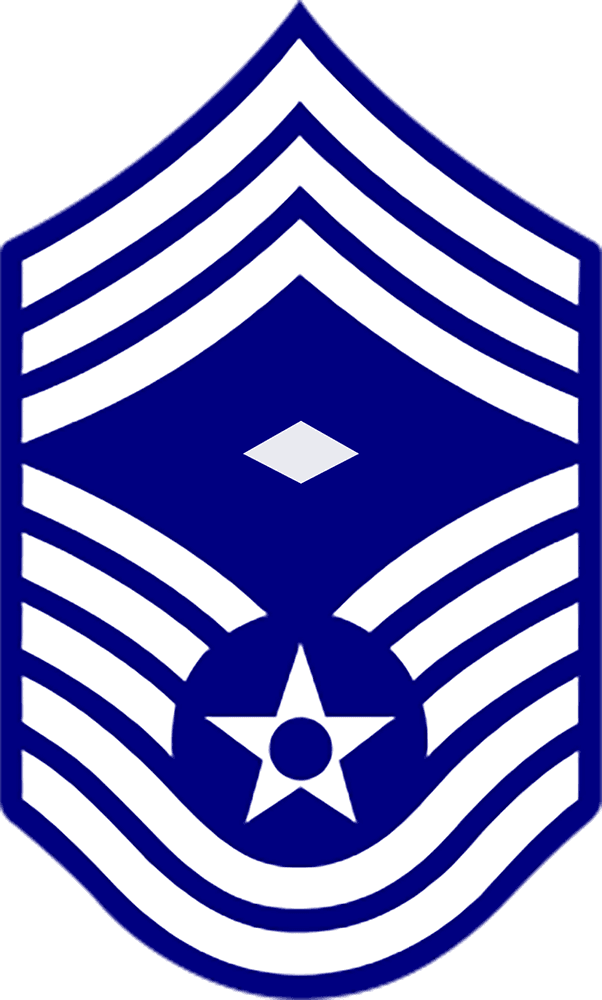
Air Force First Sergeant (E-9) rank insignia: Chief Master Sergeant chevrons with a diamond
First Sergeant
Coast Guard Command Master Chief (E-9) rank insignia: two stars above an eagle with a shield
Fleet/Command Master Chief Petty Officer
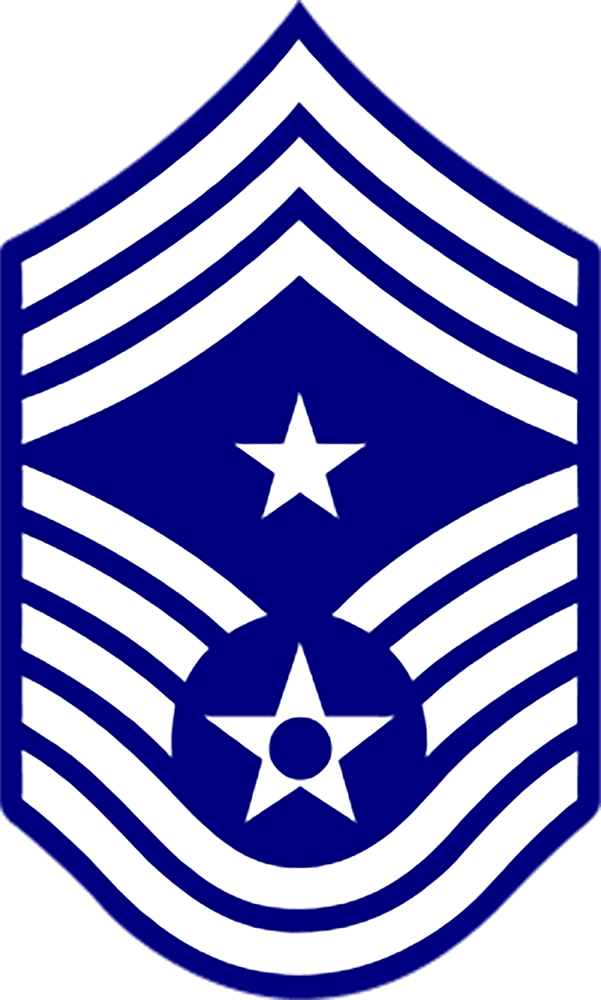
Air Force Command Chief Master Sergeant (E-9) insignia: chief chevrons with a star in the upper field
Command Chief Master Sergeant
E-9
Senior Enlisted Advisor
One per service
Sergeant Major of the Army (SMA, E-9) insignia: chevrons and rockers with an eagle emblem
Sergeant Major of the Army
(SMA)
Sergeant Major of the Marine Corps (E-9) insignia: chevrons and rockers with eagle, globe and anchor
Sergeant Major of the Marine Corps
(SgtMajMC)
Master Chief Petty Officer of the Navy (MCPON, E-9) insignia: three stars above an eagle
Master Chief Petty Officer of the Navy
(MCPON)
Chief Master Sergeant of the Air Force (CMSAF, E-9) insignia: chevrons with the Great Seal in a wreath
Chief Master Sergeant of the Air Force
(CMSAF)
Chief Master Sergeant of the Space Force (CMSSF, E-9) insignia: Space Force Delta and globe with chevrons
Chief Master Sergeant of the Space Force
(CMSSF)
Master Chief Petty Officer of the Coast Guard (E-9) insignia: three stars above an eagle and shield
Master Chief Petty Officer of the Coast Guard
(MCPOCG)

Notes on Enlisted Insignia

Army: Specialist and Corporal are both E-4, but a Corporal is an NCO and outranks a Specialist. Across the services, seniority is set by pay grade, then date of rank.
Navy and Coast Guard: The eagle and chevrons show a sailor's rate (pay grade), and the specialty mark between them shows their rating (job). In the Navy, gold chevrons and service stripes indicate 12 or more years of continuous good conduct. Chief petty officers in both services wear a gold fouled-anchor collar device.
Coast Guard: The Coast Guard operates under the Department of Homeland Security. It can be transferred to operate as a service in the Navy during wartime, but only when Congress or the President directs it. Its enlisted insignia match the Navy's except in color and at E-1: Coast Guard Seaman Recruits wear a single stripe, while Navy E-1s have worn no insignia since 1996.
Senior enlisted advisors: Each branch designates one E-9 as its most senior enlisted leader. Only one person holds each title at a time, and they draw a special rate of basic pay above the standard E-9 table.

Senior Enlisted Advisors of Each Branch

Below the six service senior enlisted advisors is the Senior Enlisted Advisor to the Chairman of the Joint Chiefs of Staff. The SEAC is drawn from any branch, advises the Chairman on joint enlisted matters, and is the most senior enlisted member of the U.S. Armed Forces.

Each branch designates one E-9 as its senior enlisted advisor, the spokesperson, and most senior enlisted leader for the entire service. These leaders advise their service's top officer and civilian leadership on matters affecting the enlisted force, including readiness, morale, training, and quality of life. Only one person holds each position at a time.

Sergeant Major of the Army (SMA, E-9) insignia: chevrons and rockers with an eagle emblem
U.S. Army

Sergeant Major of the Army: advises the Chief of Staff of the Army

SMA
Sergeant Major of the Marine Corps (E-9) insignia: chevrons and rockers with eagle, globe and anchor
U.S. Marine Corps

Sergeant Major of the Marine Corps: advises the Commandant of the Marine Corps

SgtMajMC
Master Chief Petty Officer of the Navy (MCPON, E-9) insignia: three stars above an eagle
U.S. Navy

Master Chief Petty Officer of the Navy: advises the Chief of Naval Operations

MCPON
Chief Master Sergeant of the Air Force (CMSAF, E-9) insignia: chevrons with the Great Seal in a wreath
U.S. Air Force

Chief Master Sergeant of the Air Force: advises the Air Force Chief of Staff and Secretary of the Air Force

CMSAF
Chief Master Sergeant of the Space Force (CMSSF, E-9) insignia: Space Force Delta and globe with chevrons
U.S. Space Force

Chief Master Sergeant of the Space Force: advises the Chief of Space Operations

CMSSF
Master Chief Petty Officer of the Coast Guard (E-9) insignia: three stars above an eagle and shield
U.S. Coast Guard

Master Chief Petty Officer of the Coast Guard: advises the Commandant of the Coast Guard

MCPOCG

Warrant Officer Rank Structure & Insignia (W-1 to W-5)

Technical specialists who bridge enlisted expertise and officer authority

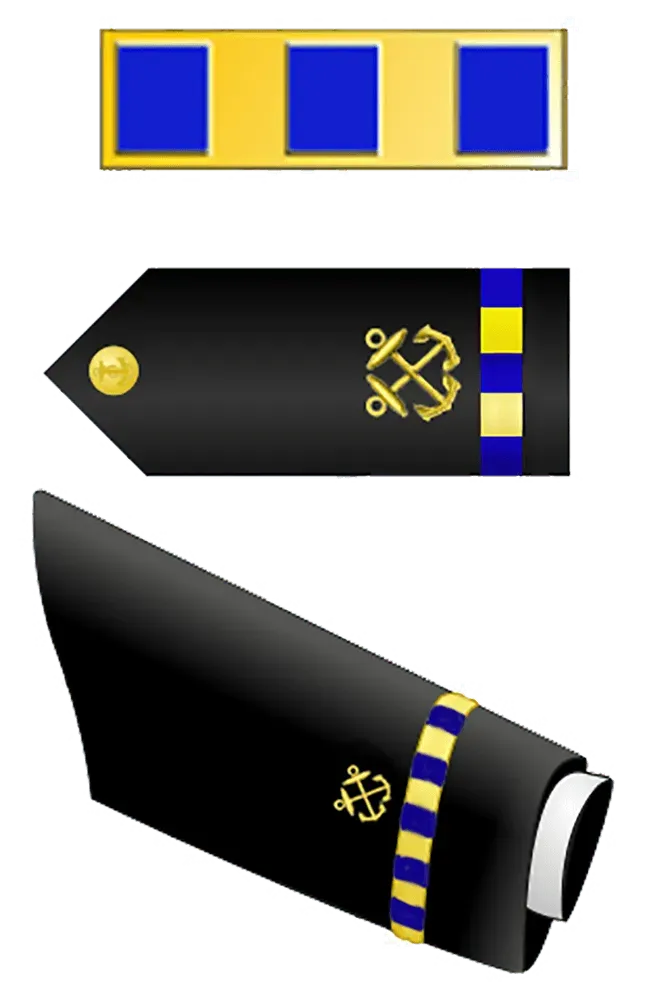
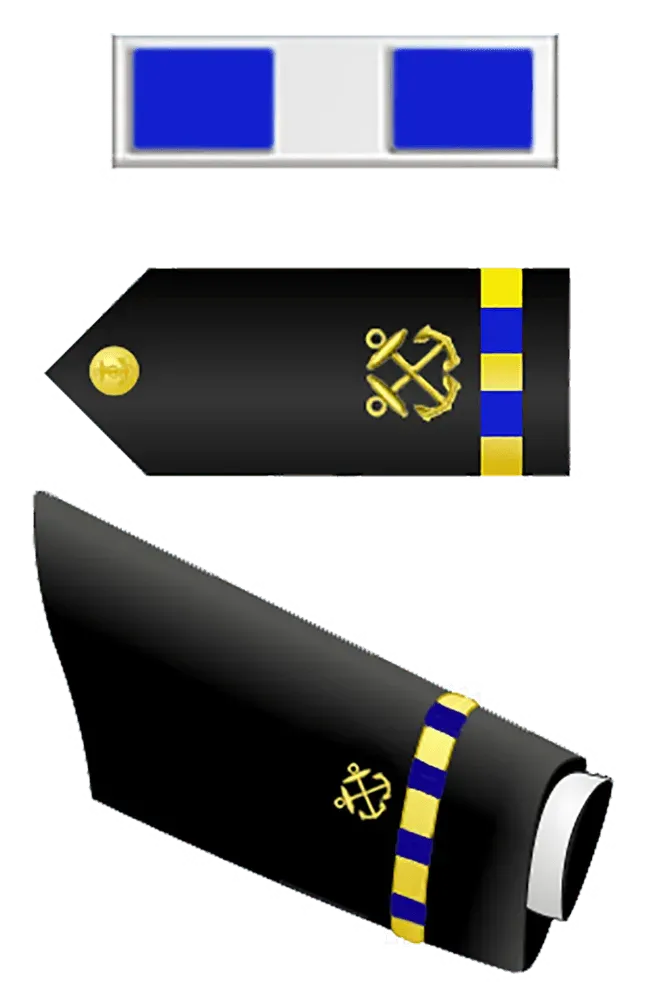
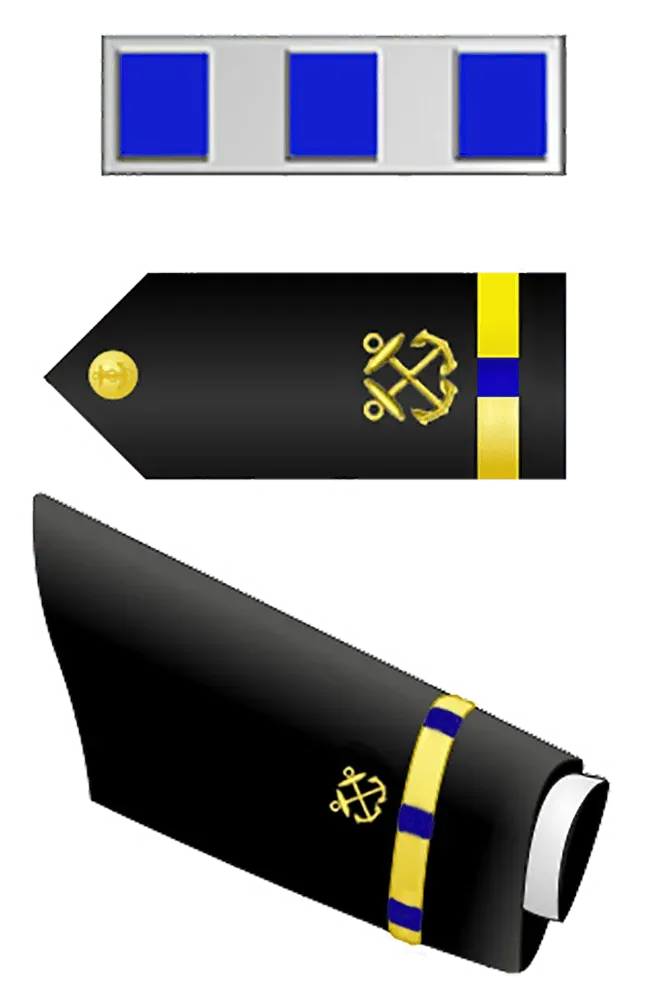
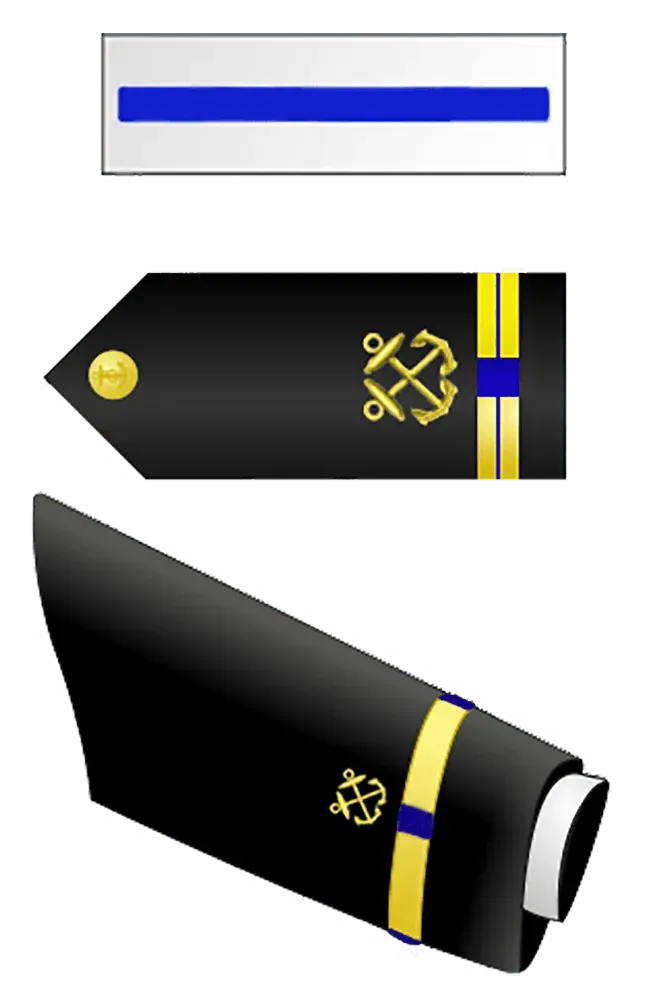
Warrant officers are highly skilled, single-track specialty officers, most of them selected from experienced enlisted personnel. They hold officer authority but remain technical experts in fields such as aviation, intelligence, cyber operations, and maintenance. They rank above all enlisted members and below O-1. A W-1 is appointed by warrant; chief warrant officers (W-2 through W-5) receive a commission.

The Army uses warrant officers most heavily, including its large corps of helicopter pilots. The Marine Corps and Navy run smaller programs; the Navy re-established the W-1 grade for cyber warrant officers in 2018. The Coast Guard uses W-2 through W-4 only. The Air Force stopped appointing warrant officers in 1959, then brought them back in 2024 for cyber and IT career fields; its first class graduated in December 2024. The Space Force does not currently use warrant officers.

GRADEARMYMARINESNAVYAIR FORCESPACE FORCECOAST GUARD
W-1
Army Warrant Officer 1 (WO1, W-1) rank insignia: silver bar with one black square
Warrant Officer 1
(WO1)
Marine Corps Warrant Officer (W-1) rank insignia: gold bar with scarlet enamel
Warrant Officer
(WO)
Navy Warrant Officer 1 (W-1) rank insignia: collar bar and shoulder board
Warrant Officer 1
(WO1)
W-2
Army Chief Warrant Officer 2 (CW2, W-2) rank insignia: silver bar with two black squares
Chief Warrant Officer 2
(CW2)
Marine Corps Chief Warrant Officer 2 (W-2) rank insignia: gold bar with scarlet blocks
Chief Warrant Officer 2
(CWO2)
Navy Chief Warrant Officer 2 (W-2) rank insignia: collar bar, shoulder board and sleeve stripe
Chief Warrant Officer 2
(CWO2)
Coast Guard Chief Warrant Officer 2 (W-2) rank insignia: collar bar and shoulder board
Chief Warrant Officer 2
(CWO2)
W-3
Army Chief Warrant Officer 3 (CW3, W-3) rank insignia: silver bar with three black squares
Chief Warrant Officer 3
(CW3)
Marine Corps Chief Warrant Officer 3 (W-3) rank insignia: silver bar with scarlet blocks
Chief Warrant Officer 3
(CWO3)
Navy Chief Warrant Officer 3 (W-3) rank insignia: collar bar, shoulder board and sleeve stripe
Chief Warrant Officer 3
(CWO3)
Coast Guard Chief Warrant Officer 3 (W-3) rank insignia: collar bar and shoulder board
Chief Warrant Officer 3
(CWO3)
W-4
Army Chief Warrant Officer 4 (CW4, W-4) rank insignia: silver bar with four black squares
Chief Warrant Officer 4
(CW4)
Marine Corps Chief Warrant Officer 4 (W-4) rank insignia: silver bar with scarlet blocks
Chief Warrant Officer 4
(CWO4)
Navy Chief Warrant Officer 4 (W-4) rank insignia: collar bar, shoulder board and sleeve stripe
Chief Warrant Officer 4
(CWO4)
Coast Guard Chief Warrant Officer 4 (W-4) rank insignia: collar bar and shoulder board
Chief Warrant Officer 4
(CWO4)
W-5
Army Chief Warrant Officer 5 (CW5, W-5) rank insignia: silver bar with a black stripe
Chief Warrant Officer 5
(CW5)
Marine Corps Chief Warrant Officer 5 (W-5) rank insignia: silver bar with a scarlet stripe
Chief Warrant Officer 5
(CWO5)
Navy Chief Warrant Officer 5 (W-5) rank insignia: collar bar, shoulder board and sleeve stripe
Chief Warrant Officer 5
(CWO5)

Commissioned Officer Rank Structure & Insignia (O-1 to O-11)

The commanders, planners, and strategic leaders of the U.S. armed forces

Commissioned officers hold presidential commissions confirmed by the U.S. Senate. They are the generalists of the military, trained to lead units, plan missions, and make strategic decisions across any assignment they receive. Officer careers progress through three groupings based on pay grade and level of command: company grade (O-1 to O-3), field grade (O-4 to O-6), and general or flag officers (O-7 and above).

Officer rank names diverge most between the sea services and the rest. The Navy and Coast Guard use a distinct naming system (Ensign, Lieutenant, Commander, Captain, Admiral), while the Army, Marine Corps, Air Force, and Space Force share the lieutenant-through-general progression. Watch for the "Captain" trap: an Army, Marine, Air Force, or Space Force Captain is an O-3, but a Navy or Coast Guard Captain is an O-6.

GRADEARMYMARINESNAVYAIR FORCESPACE FORCECOAST GUARD
O-1
Second Lieutenant (O-1) rank insignia: one gold bar, used by the Army, Marine Corps, Air Force and Space Force
Second Lieutenant
(2LT)
Second Lieutenant (O-1) rank insignia: one gold bar, used by the Army, Marine Corps, Air Force and Space Force
Second Lieutenant
(2ndLt)
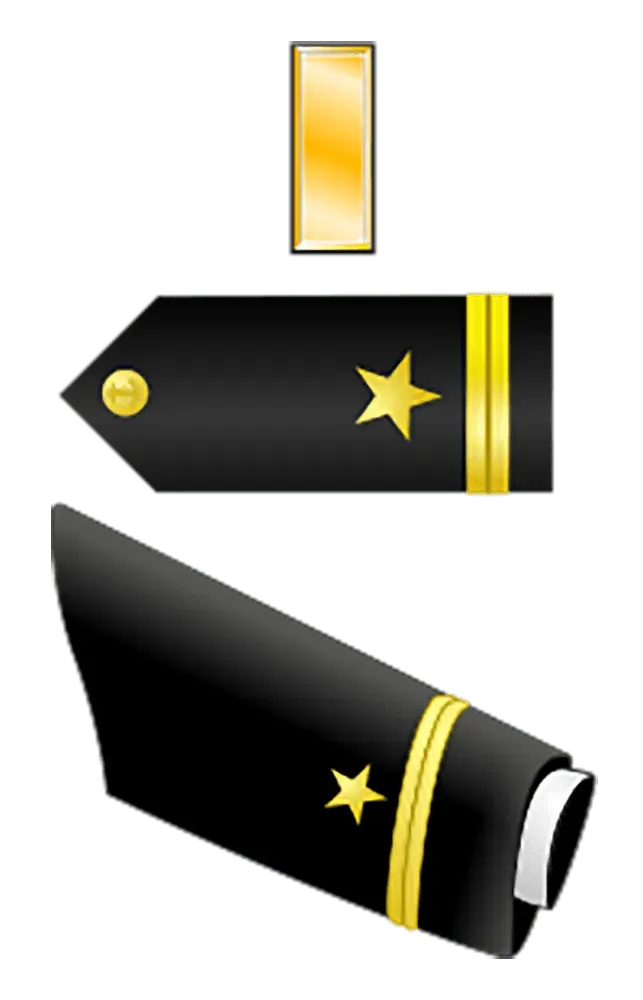
Navy Ensign (O-1) rank insignia: gold collar bar, shoulder board and sleeve stripe
Ensign
(ENS)
Second Lieutenant (O-1) rank insignia: one gold bar, used by the Army, Marine Corps, Air Force and Space Force
Second Lieutenant
(2d Lt)
Second Lieutenant (O-1) rank insignia: one gold bar, used by the Army, Marine Corps, Air Force and Space Force
Second Lieutenant
(2d Lt)
Coast Guard Ensign (O-1) rank insignia: gold collar bar, shoulder board and sleeve stripe
Ensign
(ENS)
O-2
First Lieutenant (O-2) rank insignia: one silver bar, used by the Army, Marine Corps, Air Force and Space Force
First Lieutenant
(1LT)
First Lieutenant (O-2) rank insignia: one silver bar, used by the Army, Marine Corps, Air Force and Space Force
First Lieutenant
(1stLt)
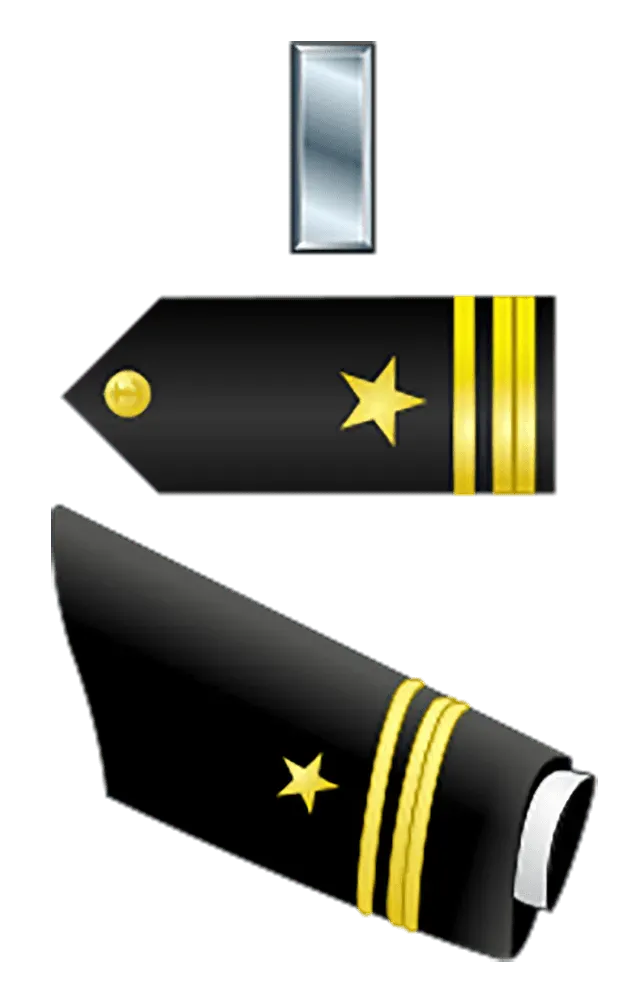
Navy Lieutenant Junior Grade (O-2) rank insignia: silver collar bar, shoulder board, sleeve stripes
Lieutenant Junior Grade
(LTJG)
First Lieutenant (O-2) rank insignia: one silver bar, used by the Army, Marine Corps, Air Force and Space Force
First Lieutenant
(1st Lt)
First Lieutenant (O-2) rank insignia: one silver bar, used by the Army, Marine Corps, Air Force and Space Force
First Lieutenant
(1st Lt)
Coast Guard Lieutenant Junior Grade (O-2) rank insignia: silver collar bar, shoulder board, sleeve stripes
Lieutenant Junior Grade
(LTJG)
O-3
Captain (O-3) rank insignia: two silver bars, used by the Army, Marine Corps, Air Force and Space Force
Captain
(CPT)
Captain (O-3) rank insignia: two silver bars, used by the Army, Marine Corps, Air Force and Space Force
Captain
(Capt)
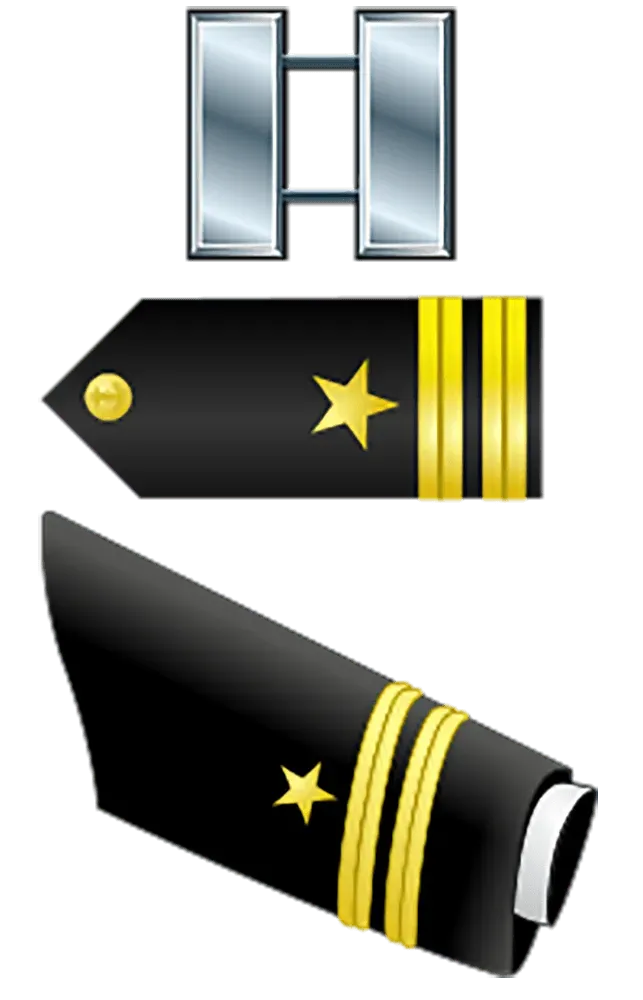
Navy Lieutenant (O-3) rank insignia: two silver collar bars, shoulder board and sleeve stripes
Lieutenant
(LT)
Captain (O-3) rank insignia: two silver bars, used by the Army, Marine Corps, Air Force and Space Force
Captain
(Capt)
Captain (O-3) rank insignia: two silver bars, used by the Army, Marine Corps, Air Force and Space Force
Captain
(Capt)
Coast Guard Lieutenant (O-3) rank insignia: two silver collar bars, shoulder board, sleeve stripes
Lieutenant
(LT)
O-4
Major (O-4) rank insignia: gold oak leaf, used by the Army, Marine Corps, Air Force and Space Force
Major
(MAJ)
Major (O-4) rank insignia: gold oak leaf, used by the Army, Marine Corps, Air Force and Space Force
Major
(Maj)
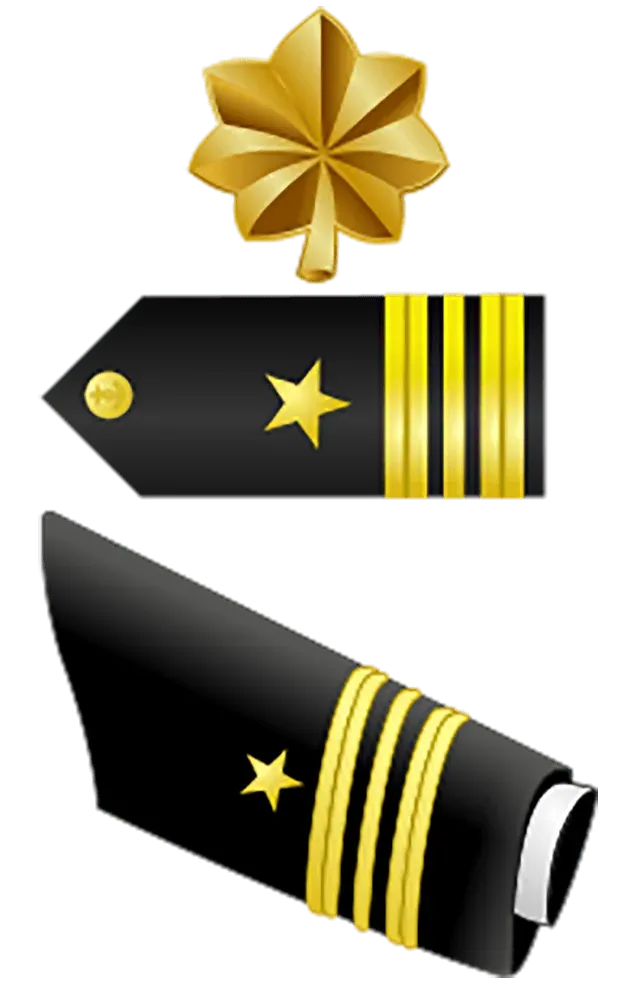
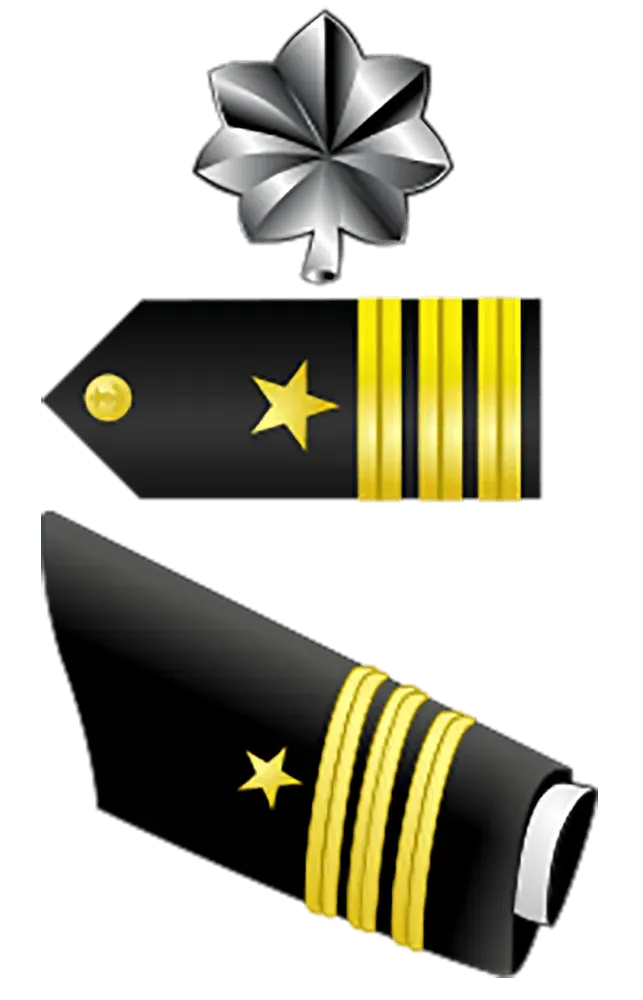
Navy Lieutenant Commander (O-4) rank insignia: gold oak leaf, shoulder board and sleeve stripes
Lieutenant Commander
(LCDR)
Major (O-4) rank insignia: gold oak leaf, used by the Army, Marine Corps, Air Force and Space Force
Major
(Maj)
Major (O-4) rank insignia: gold oak leaf, used by the Army, Marine Corps, Air Force and Space Force
Major
(Maj)
Coast Guard Lieutenant Commander (O-4) rank insignia: gold oak leaf, shoulder board, sleeve stripes
Lieutenant Commander
(LCDR)
O-5
Lieutenant Colonel (O-5) rank insignia: silver oak leaf, used by the Army, Marine Corps, Air Force and Space Force
Lieutenant Colonel
(LTC)
Lieutenant Colonel (O-5) rank insignia: silver oak leaf, used by the Army, Marine Corps, Air Force and Space Force
Lieutenant Colonel
(LtCol)
Navy Commander (O-5) rank insignia: silver oak leaf, shoulder board and sleeve stripes
Commander
(CDR)
Lieutenant Colonel (O-5) rank insignia: silver oak leaf, used by the Army, Marine Corps, Air Force and Space Force
Lieutenant Colonel
(Lt Col)
Lieutenant Colonel (O-5) rank insignia: silver oak leaf, used by the Army, Marine Corps, Air Force and Space Force
Lieutenant Colonel
(Lt Col)
Coast Guard Commander (O-5) rank insignia: silver oak leaf, shoulder board and sleeve stripes
Commander
(CDR)
O-6
Colonel (O-6) rank insignia: silver eagle, used by the Army, Marine Corps, Air Force and Space Force
Colonel
(COL)
Colonel (O-6) rank insignia: silver eagle, used by the Army, Marine Corps, Air Force and Space Force
Colonel
(Col)
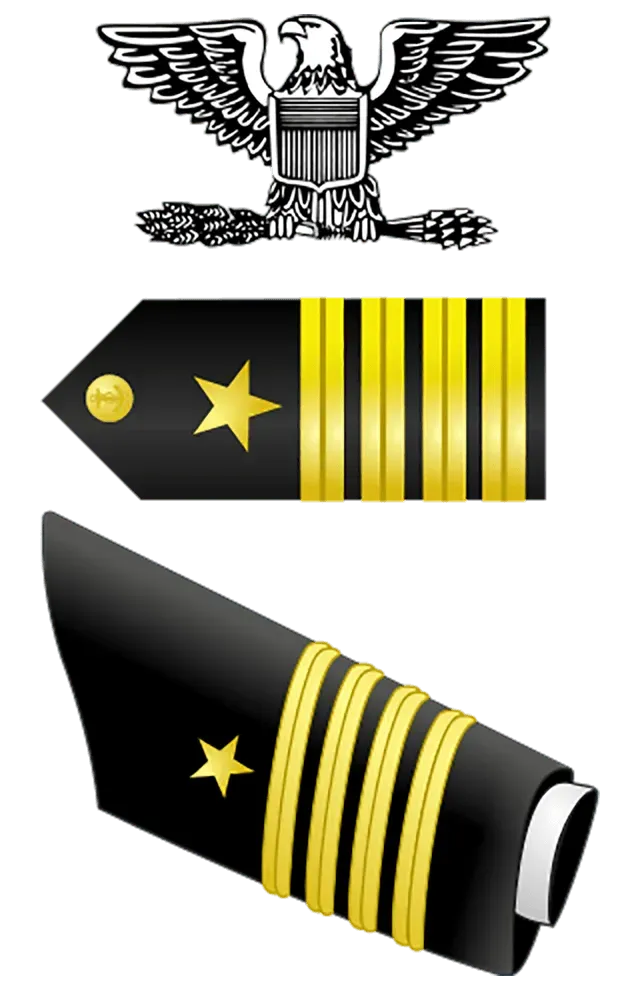
Navy Captain (O-6) rank insignia: silver eagle, shoulder board and sleeve stripes
Captain
(CAPT)
Colonel (O-6) rank insignia: silver eagle, used by the Army, Marine Corps, Air Force and Space Force
Colonel
(Col)
Colonel (O-6) rank insignia: silver eagle, used by the Army, Marine Corps, Air Force and Space Force
Colonel
(Col)
Coast Guard Captain (O-6) rank insignia: silver eagle, shoulder board and sleeve stripes
Captain
(CAPT)
O-7
Brigadier General (O-7) one-star rank insignia, used by the Army, Marine Corps, Air Force and Space Force
Brigadier General
(BG)
Brigadier General (O-7) one-star rank insignia, used by the Army, Marine Corps, Air Force and Space Force
Brigadier General
(BGen)
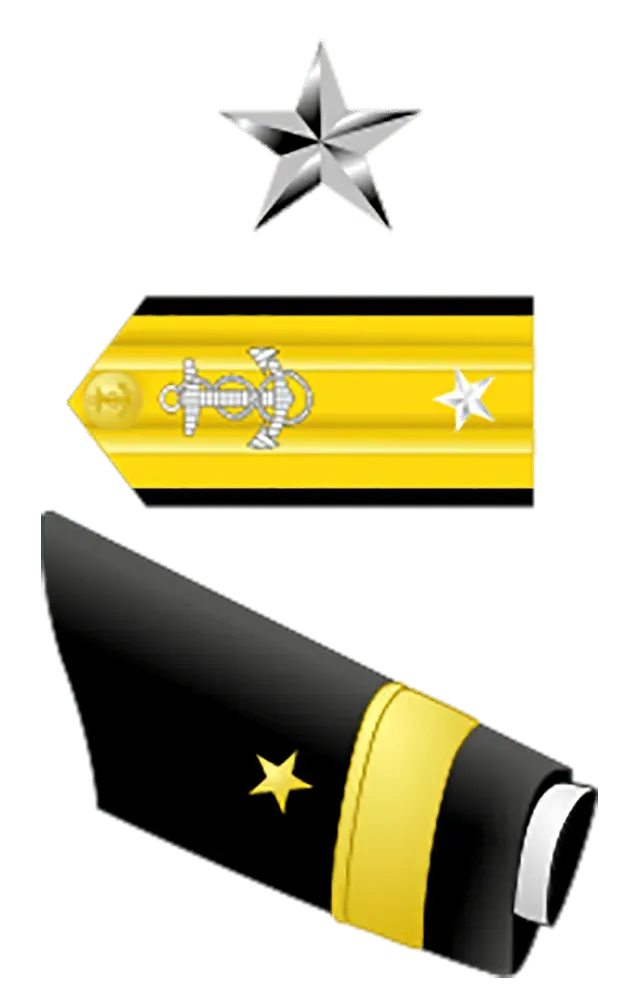
Navy Rear Admiral Lower Half (O-7) insignia: one star, shoulder board and sleeve stripe
Rear Admiral Lower Half
(RDML)
Brigadier General (O-7) one-star rank insignia, used by the Army, Marine Corps, Air Force and Space Force
Brigadier General
(Brig Gen)
Brigadier General (O-7) one-star rank insignia, used by the Army, Marine Corps, Air Force and Space Force
Brigadier General
(Brig Gen)
Coast Guard Rear Admiral Lower Half (O-7) insignia: one star, shoulder board and sleeve stripe
Rear Admiral Lower Half
(RDML)
O-8
Major General (O-8) two-star rank insignia, used by the Army, Marine Corps, Air Force and Space Force
Major General
(MG)
Major General (O-8) two-star rank insignia, used by the Army, Marine Corps, Air Force and Space Force
Major General
(MajGen)
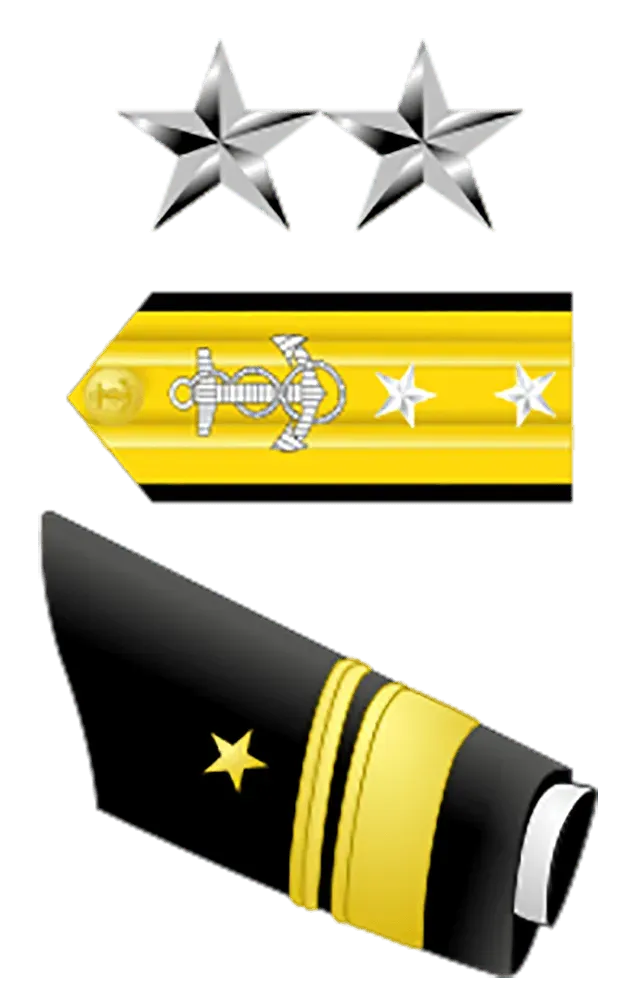
Navy Rear Admiral Upper Half (O-8) insignia: two stars, shoulder board and sleeve stripes
Rear Admiral Upper Half
(RADM)
Major General (O-8) two-star rank insignia, used by the Army, Marine Corps, Air Force and Space Force
Major General
(Maj Gen)
Major General (O-8) two-star rank insignia, used by the Army, Marine Corps, Air Force and Space Force
Major General
(Maj Gen)
Coast Guard Rear Admiral Upper Half (O-8) insignia: two stars, shoulder board and sleeve stripes
Rear Admiral Upper Half
(RADM)
O-9
Lieutenant General (O-9) three-star rank insignia, used by the Army, Marine Corps, Air Force and Space Force
Lieutenant General
(LTG)
Lieutenant General (O-9) three-star rank insignia, used by the Army, Marine Corps, Air Force and Space Force
Lieutenant General
(LtGen)
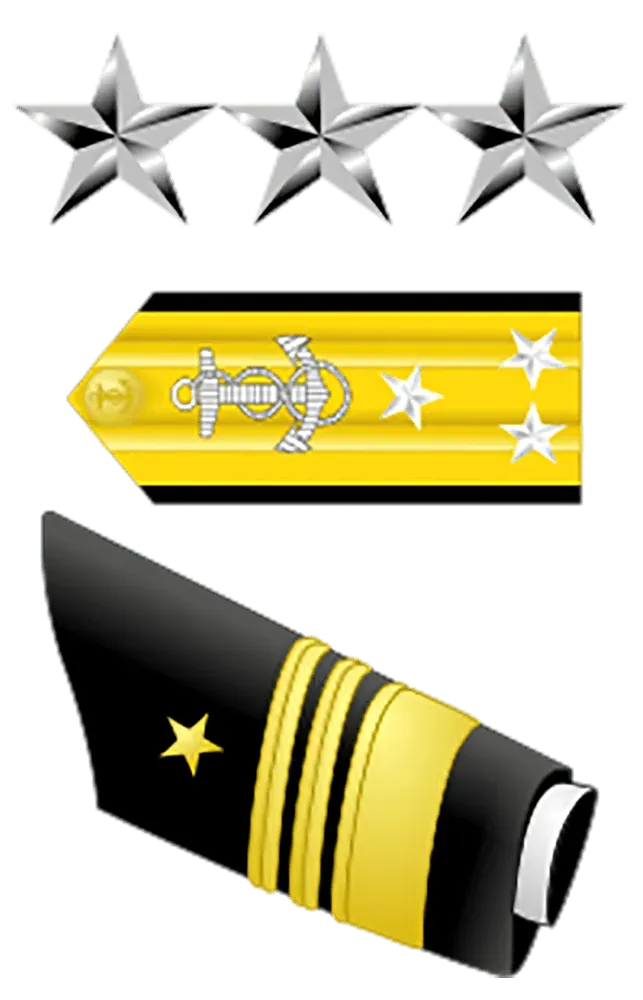
Navy Vice Admiral (O-9) insignia: three stars, shoulder board and sleeve stripes
Vice Admiral
(VADM)
Lieutenant General (O-9) three-star rank insignia, used by the Army, Marine Corps, Air Force and Space Force
Lieutenant General
(Lt Gen)
Lieutenant General (O-9) three-star rank insignia, used by the Army, Marine Corps, Air Force and Space Force
Lieutenant General
(Lt Gen)
Coast Guard Vice Admiral (O-9) insignia: three stars, shoulder board and sleeve stripes
Vice Admiral
(VADM)
O-10
General (O-10) four-star rank insignia, used by the Army, Marine Corps, Air Force and Space Force
General
(GEN)
General (O-10) four-star rank insignia, used by the Army, Marine Corps, Air Force and Space Force
General
(Gen)
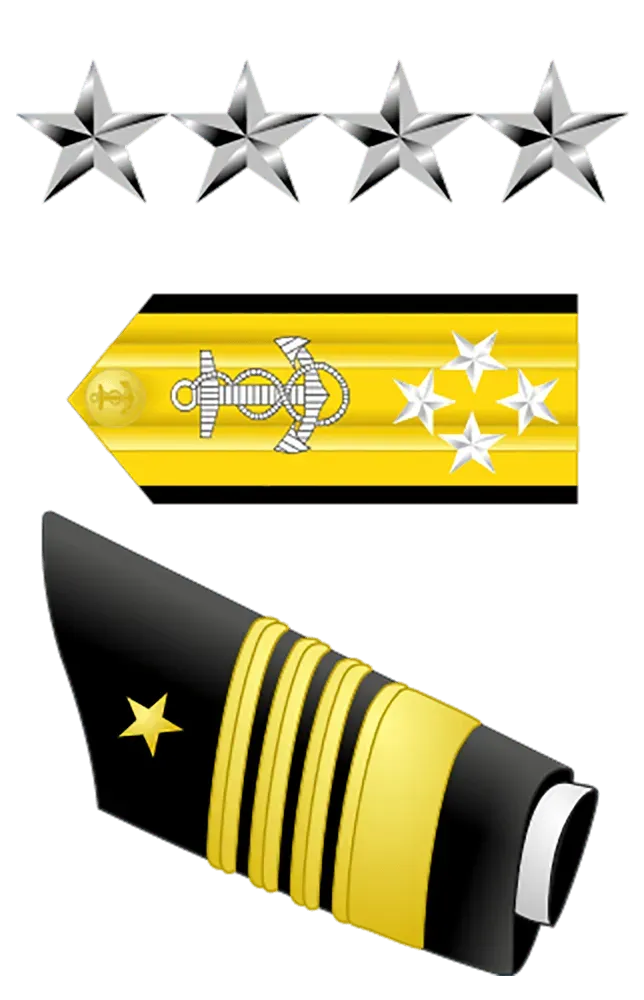
Navy Admiral (O-10) insignia: four stars, shoulder board and sleeve stripes
Admiral
(ADM)
General (O-10) four-star rank insignia, used by the Army, Marine Corps, Air Force and Space Force
General
(Gen)
General (O-10) four-star rank insignia, used by the Army, Marine Corps, Air Force and Space Force
General
(Gen)
Coast Guard Admiral (O-10) insignia: four stars, shoulder board and sleeve stripes
Admiral
(ADM)
O-11
General of the Army (O-11) five-star rank insignia: five silver stars in a pentagon
General of the Army
Fleet Admiral (O-11) five-star rank insignia: five silver stars in a pentagon
Fleet Admiral
General of the Air Force (O-11) five-star rank insignia: five silver stars in a pentagon
General of the Air Force
Fleet Admiral (O-11) five-star rank insignia: five silver stars in a pentagon
Fleet Admiral
Five-star rank (often labeled O-11) was created by Congress in December 1944 for the senior commanders of World War II. Nine officers held it: five Army generals, including Hap Arnold, who became General of the Air Force in 1949, and four Navy fleet admirals. Omar Bradley made the last appointment in 1950, and no one has held five-star rank since Bradley died in 1981. The Marine Corps, Space Force, and Coast Guard have never had a five-star officer.

How to Read Military Rank Insignia

The visual symbols that identify rank on every uniform

Rank insignia are worn on uniforms to identify a service member's rank at a glance. The shape, color, and placement of insignia communicate rank, category (enlisted, warrant, or officer), and seniority. While details vary by branch, a handful of core symbols appear across all six services.

Chevrons
Most enlisted personnel
V-shaped stripes worn on the sleeve or collar. More stripes, and rockers beneath them, mean higher rank. Army and Marine chevrons point up; Navy and Coast Guard petty officer chevrons point down beneath an eagle.
Bars
Junior officers (O-1 to O-3)
O-1 wears one gold bar, O-2 one silver bar, and O-3 two silver bars, often called "railroad tracks."
Oak leaves
O-4 and O-5
A gold oak leaf for a Major or Lieutenant Commander; a silver oak leaf for a Lieutenant Colonel or Commander.
Eagles
O-6
A silver eagle, worn by Colonels in the Army, Marine Corps, Air Force, and Space Force, and by Captains in the Navy and Coast Guard.
Stars
General and flag officers (O-7 to O-10)
Silver stars: one for O-7, two for O-8, three for O-9, and four for O-10.
Sleeve stripes and shoulder boards
Navy and Coast Guard officers
On dress uniforms, Navy and Coast Guard officers show rank with gold stripes on the sleeve or shoulder boards instead of collar devices. The number and width of stripes indicate the grade.
Bars with squares
Warrant officers
Bars broken by colored squares or bands indicate warrant grade. Colors and patterns vary by branch.
Eagle, chevrons, and rating marks
Navy and Coast Guard enlisted
Petty officers wear an eagle above their chevrons with a specialty mark showing their rating. Chief petty officers add a rocker above the chevrons and wear a gold fouled anchor on the collar. In the Navy, gold chevrons indicate 12 or more years of good conduct.

How to Address Military Service Members

Proper forms of address for every rank category

Use a service member's rank and last name when speaking to or writing about them. In spoken conversation, many ranks are shortened. Officers are addressed as "Sir" or "Ma'am." Enlisted members, including senior enlisted leaders, are normally addressed by rank instead; many NCOs will politely correct a "Sir." Civilians are rarely held to military etiquette, and a respectful "Sir" or "Ma'am" is never an insult, but using the right title shows you know the culture.

Army junior enlisted
Rank and last name
Private Rodriguez, Specialist Diaz
Army Corporals and sergeants (E-4 to E-8)
"Corporal", or "Sergeant" for Sergeant through Master Sergeant
Corporal Lin, Sergeant Brown
Army First Sergeant, Sergeant Major
Full title
First Sergeant Reitsch, Sergeant Major Lacsam
Marine enlisted
Full rank; Marines rarely shorten it
Lance Corporal Kitral, Staff Sergeant Carlson, Gunnery Sergeant Kornfeind
Navy and Coast Guard E-1 to E-3
Seaman (or Fireman, Airman, etc.) and last name
Seaman Gallagher
Air Force and Space Force junior enlisted
Airman, or Specialist in the Space Force
Airman Mitchell, Specialist Durment
Air Force and Space Force NCOs and SNCOs
"Sergeant", or full rank; E-9s are "Chief"
Sergeant Hacker, Chief Yankoe
Warrant officers
"Chief" for W-2 to W-5, "Mr". or "Ms". for W-1 (Army); Marines infantry weapons officers are called "Gunner"
Chief Anderson, Mr. Reed
Lieutenants (O-1, O-2)
Lieutenant
Lieutenant Smith
Lieutenant Colonel
Colonel
Colonel Lowe
Navy Lieutenant Commander
Commander
Commander Savage
General and flag officers
General or Admiral, regardless of star count
General Waller, Admiral Lores

Military Rank Structure FAQ

Common questions about ranks, pay grades, and insignia

The U.S. military rank structure organizes service members into three categories: enlisted (E-1 to E-9), warrant officers (W-1 to W-5), and commissioned officers (O-1 to O-10). All six branches share the same pay grades but use their own rank titles and insignia. Rank sets authority and precedence, while pay grade standardizes pay across services.

Enlisted ranks run from E-1 to E-9, warrant officer ranks from W-1 to W-5, and officer ranks from O-1 to O-10. Warrant officers rank above all enlisted members and below all commissioned officers. In the Army, for example, the order runs Private through Sergeant Major, then Warrant Officer 1 through Chief Warrant Officer 5, then Second Lieutenant through General.

There are 24 standard pay grades: nine enlisted, five warrant officer, and ten commissioned officer. Each branch has roughly 20 to 30 rank titles depending on whether it uses warrant officers and how many positional titles, such as First Sergeant or Command Sergeant Major, share a pay grade.

Pay grade is an administrative classification that sets pay, such as E-5 or O-3. Rank is the title a member holds, such as Sergeant or Captain, and it carries authority and precedence. Two ranks can share a pay grade: an Army Corporal and a Specialist are both E-4, but only the Corporal is an NCO.

A noncommissioned officer is an enlisted leader responsible for training, supervising, and caring for junior enlisted members. NCO status begins at E-4 for Army Corporals and Marines, at E-4 Petty Officer Third Class in the Navy and Coast Guard, and at E-5 Staff Sergeant in the Air Force and Sergeant in the Space Force.

No. An Army Specialist (E-4) is not a noncommissioned officer, even though a Corporal holds the same pay grade. Specialists are junior enlisted members with technical responsibilities, and most Army E-4s are Specialists. The Space Force's Specialist 1 through Specialist 4 ranks (E-1 to E-4) are also junior enlisted, not NCOs.

Senior NCO is the term the Army, Air Force, and Space Force use for E-7 to E-9. Staff NCO is the Marine Corps term, and it starts one grade earlier, at E-6 Staff Sergeant. The Navy and Coast Guard call their E-7 to E-9s Chief Petty Officers instead.

A Chief Petty Officer is an E-7 in the Navy or Coast Guard. E-7s, E-8s, and E-9s (Chief, Senior Chief, and Master Chief) make up the Chiefs' Mess, the senior enlisted leadership of a command. Chiefs wear khaki uniforms and a gold fouled-anchor collar device, and they are addressed as "Chief".

Both are E-8s in the Army and Marine Corps. A First Sergeant is the senior enlisted advisor to a company commander and focuses on discipline, welfare, and readiness. A Master Sergeant serves as a senior technical expert or staff NCO. In the Air Force, First Sergeant is a special-duty position held by E-7 to E-9s.

In the Navy and Coast Guard, an enlisted sailor's rate is their pay grade, such as Petty Officer Second Class, and their rating is their occupation, such as Boatswain's Mate. The two combine into a sailor's full title, for example, Boatswain's Mate Second Class. Rating badges show both: chevrons for the rate and a specialty mark for the rating.

The highest active rank is O-10: General in the Army, Marine Corps, Air Force, and Space Force, or Admiral in the Navy and Coast Guard. The Chairman of the Joint Chiefs of Staff holds the most senior position but still wears four stars. No five-star appointment has been made since 1950.

The highest enlisted pay grade is E-9. The most senior enlisted member of the armed forces is the Senior Enlisted Advisor to the Chairman of the Joint Chiefs of Staff. Below that post, each branch has one top enlisted leader: the Sergeant Major of the Army, Sergeant Major of the Marine Corps, Master Chief Petty Officer of the Navy, Chief Master Sergeant of the Air Force, Chief Master Sergeant of the Space Force, and Master Chief Petty Officer of the Coast Guard.

No. The Army, Marine Corps, Navy, and Coast Guard have warrant officers, though the Coast Guard uses only W-2 to W-4. The Air Force brought warrant officers back in 2024 for cyber and IT fields after more than 60 years without them. The Space Force does not currently use warrant officers.

The highest enlisted pay grade is E-9. The most senior enlisted member of the armed forces is the Senior Enlisted Advisor to the Chairman of the Joint Chiefs of Staff. Below that post, each branch has one top enlisted leader: the Sergeant Major of the Army, Sergeant Major of the Marine Corps, Master Chief Petty Officer of the Navy, Chief Master Sergeant of the Air Force, Chief Master Sergeant of the Space Force, and Master Chief Petty Officer of the Coast Guard.

In the Army, Marine Corps, Air Force, and Space Force, company grade officers are O-1 to O-3, field grade officers are O-4 to O-6, and general officers are O-7 and above. The Navy and Coast Guard more commonly say junior officers for O-1 to O-3 and flag officers for O-7 and above. Officer appointments and promotions generally require Senate confirmation, which is usually granted in large batch lists.

Use rank and last name. Officers are addressed as "Sir" or "Ma'am".Enlisted members, including senior leaders, are normally addressed by rank: "Sergeant" for most Army sergeants, "Chief" for Navy and Coast Guard E-7s, and full rank for Marines. Lieutenant colonels are called "Colonel," and all generals are "General".

Almost. The Coast Guard uses the same rank titles and pay grades as the Navy, with Coast Guard-specific insignia colors and a shield emblem. Its E-1 Seaman Recruits wear one stripe, while Navy E-1s wear none, and it uses only W-2 to W-4 warrant grades. The Coast Guard operates under the Department of Homeland Security and moves to the Navy in wartime only if Congress or the President directs it.

The Space Force, established December 20, 2019, unveiled its enlisted rank insignia on September 20, 2021. Junior enlisted Guardians (E-1 to E-4) hold Specialist 1 through Specialist 4 titles unique to the Space Force, while E-5 and above largely mirror Air Force titles, except that a Space Force E-5 is a Sergeant rather than a Staff Sergeant.

Related Military Resources

Tools and references for service members, veterans, and military families
Reference

Military Pay Chart

Current basic pay tables by rank and years of service, plus housing and subsistence allowances.

View Pay Chart
Reference

Military Time Chart

Convert between standard 12-hour time and military 24-hour time with our complete reference chart.

View Time Chart
Reference

Military Dictionary

Search military terms, acronyms, and slang across every branch of service.

Browse Dictionary
Directory

Military Base Database

Searchable directory of 728 U.S. military installations worldwide, with location, branch, and mission details.

Browse Bases
Deals

Military Discounts & Deals

Verified military discounts from hundreds of brands across retail, travel, and entertainment.

Browse Deals

Authoritative Sources

Rank structure, insignia, and pay grade data on this page is sourced directly from official U.S. Department of Defense and service-specific publications. All insignia are public domain U.S. government works.


    Last reviewed: March 2026. Content reflects rank structure as of this date, including the 2024 Air Force warrant officer reintroduction in cyber and IT fields.
    Stay Connected with the Military Community
    Get weekly updates on military pay changes, base spotlights, exclusive discounts, and lifestyle resources delivered to your inbox.